
How to Assert Your Rights Without Escalating a Situation
There’s a misconception many people have about asserting their rights:
They think speaking up means getting loud, getting defensive, or getting confrontational.
But in real life — especially during a police encounter — asserting your rights responsibly has nothing to do with attitude. It has everything to do with clarity, calmness, and confidence.
And the truth is this:
You can protect your rights without escalating the situation.
You can be firm and respectful at the same time.
You can stand your ground without becoming a threat.
You can say less while protecting more.
This guide walks you through exactly how to do that — step by step — in a way that keeps you safe and ensures the facts remain on your side.
Understand Your Rights Before You Need Them
The time to learn your rights is not when red-and-blue lights appear behind you.
It’s now — when you’re calm, thinking clearly, and not under pressure.
Here are the core rights every person should be familiar with:
1. The Right to Remain Silent
You don’t have to answer questions like:
“Where are you coming from?”
“Where are you going?”
“Have you been drinking?”
“What’s in the car?”
Silence is not disrespect — it’s your legal protection.

2. The Right to Refuse Consent to a Search
Unless an officer has probable cause or a warrant, you can say:
“I do not consent to a search.”
Politely. Calmly. Firmly.
3. The Right to Record
You have the right to record police in public as long as you don’t interfere.
This is where the H.E.L.P. App gives you a major advantage:
Shake-to-record activation
Automatic cloud backup
Timestamps and GPS metadata
On-screen rights reminders
Encrypted evidence vault
Knowing your rights gives you the confidence to assert them without panic — and that confidence reduces tension.
Stay Calm: Your Tone Is Your First Line of Defense
The fastest way to escalate a situation is through tone — not words.
People respond more to how you speak than what you say.
Here’s what to remember:
Keep your voice steady
Speak a little slower than usual.
It naturally lowers the temperature.
Avoid sarcasm
No matter how unfair the moment feels, sarcasm reads as threat.
Don’t interrupt
Let the officer finish speaking before you respond.
Use short, clear sentences
You don’t owe explanations.
You owe clarity.
Calmness is not weakness — it’s strategy.
It gives the officer no reason to escalate, and it helps ensure the interaction stays as predictable as possible.
Use Respectful Phrases That Still Protect Your Rights
You don’t need to debate.
You don’t need to justify yourself.
You definitely don’t need to yell.
Instead, use assertive but respectful language — the power phrases that protect your rights and your safety.
Here are the best examples:
“Officer, I’m going to remain silent.”
“I do not consent to any searches.”
“I prefer not to answer questions without an attorney.”
“Am I being detained, or am I free to go?”
“For my safety and yours, I am recording this interaction.”
“I will comply with your instructions.”
These statements are:
Clear
Legal
Respectful
Non-confrontational
And most importantly — they don’t escalate the situation.
Control Your Body Language
Even when your words are respectful, your body language can send the wrong message.
Here’s what keeps encounters calm:
Hands visible
Never keep your hands hidden in pockets, hoodies, bags, or behind your back.
Slow, predictable movements
If reaching for something:
“Officer, I’m going to get my wallet now. It’s in my right pocket.”
Stand still
No pacing.
No sudden gestures.
Face the officer without staring them down
Neutral expression.
Neutral posture.
Avoid leaning into the officer’s space
Distance is de-escalation.
Body language either protects you — or makes the officer more alert.
The right posture makes everything else easier.
Let the H.E.L.P. App Support You in Real Time
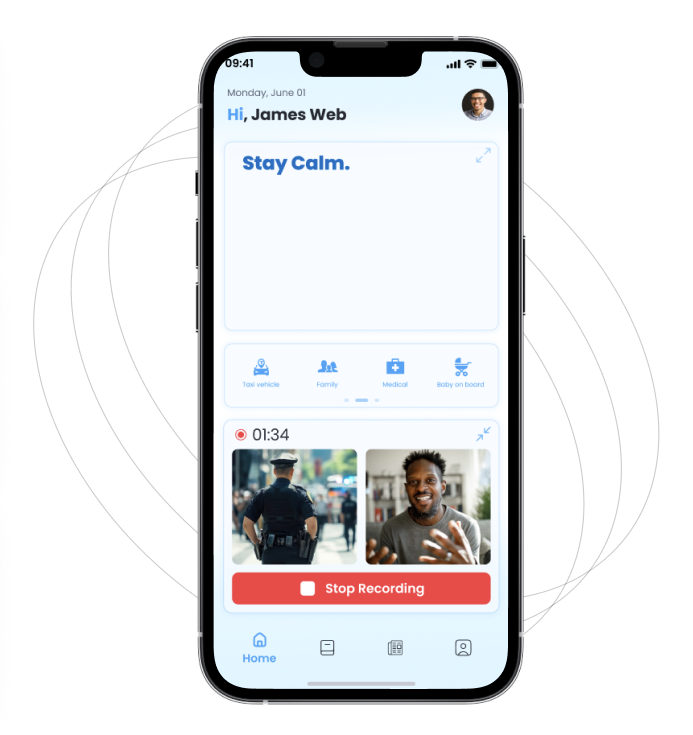
One of the smartest ways to assert your rights without escalating a situation is to use a tool that:
Keeps you calm
Reminds you of your rights
Records what happens
Uploads evidence automatically
Protects both you and the office
That tool is the H.E.L.P. App.
Here’s how it helps in the moment:
Shake-to-Record Activation
No looking at your phone.
No fumbling.
No suspicious movements.
Real-Time Rights Guidance
The app shows your rights onscreen in simple, calm language as the encounter unfolds.
Automatic Cloud Upload
Even if your phone falls or is taken, your recording is safe.
Stealth Mode
You can record without bright lights or obvious movement.
Certified Metadata
Your video becomes trustworthy evidence — not just a clip.
The app is designed specifically to lower tension, not increase it.
Know When to Stop Talking
Silence is one of the safest, strongest forms of asserting your rights.
If the tone is rising, the questions are aggressive, or you feel misunderstood, simply stop.
You can calmly repeat:
“I am choosing to remain silent.”
Not louder.
Not angrier.
Not faster.
Just steady.
Talking too much escalates situations more than anything else.
Once you invoke the right to remain silent, you have legally protected yourself.
Comply Physically — Assert Legally
This is key.
You can follow instructions physically while still asserting your rights verbally.
For example:
If they ask you to step out of the car → step out.
If they ask for ID → hand it over.
If they give a lawful order → follow it.
But you can still say:
“I do not consent to a search.”
“I am remaining silent.”
“I do not wish to answer questions.”
This approach keeps the situation from escalating while protecting you legally.
It also ensures that your calm, respectful behavior is visible on recording.
Never Argue the Law on the Street
This is a rule every person should memorize:
You cannot win an argument during a police encounter — but you can win one afterward.
Even if the officer is wrong.
Even if you know the law better.
Even if the situation feels unfair.
Arguing escalates.
Recording protects.
The H.E.L.P. App preserves the facts.
Your attorney can challenge the encounter later using:
Evidence
Metadata
Transcripts
Time-stamped video
Rights violations
Let the moment pass.
Let the law work in your favor after the fact.
Know When a Situation Is Escalating — and How to Reverse It
Escalation often looks like:
Raised voices
Faster speech
Confusion
Repeated demands
Sudden movement
Emotional reactions
Tension in body language
Here’s the de-escalation script you can teach yourself:
Pause
Take a slow breath
Speak softer than you feel
Keep your hands visible
Say:
“Officer, I want to cooperate.”
“I’m not resisting.”
“I am calm and just want clarity.”
This resets the energy of the moment.
Remember: Asserting Your Rights Protects Officers Too
A well-informed, calm citizen reduces risk for everyone — including the officer.
When you:
Keep your hands visible
Speak calmly
Follow clear instructions
Record transparently
State your rights respectfully
…you create a safer environment for both sides.
This is why many officers actually appreciate the H.E.L.P. App — it creates clarity, accountability, and a neutral record that protects them from false accusations.
Final Thought: Your Rights Are Only Useful If You Can Use Them Safely
Asserting your rights doesn’t require anger.
It doesn’t require arguments.
It doesn’t require bravery.
It requires knowledge, calmness, and tools that support you when emotions rise and details get blurry.
You can stand up for yourself without confrontation.
You can protect your freedom without creating tension.
You can document the truth without disrespect.
And the H.E.L.P. App was built to help you do exactly that — when it matters most.
Download the H.E.L.P. App Today

Protect your rights.
Protect your peace.
Protect your future.