How to File a Police Complaint: A Citizen’s Guide
When something goes wrong in a police encounter, most people don’t know what to do next — or if filing a complaint will even make a difference.
The uncertainty alone can make you feel powerless.
But here’s the truth:
Filing a police complaint is your right.
And when you understand how to do it — with clear documentation, the right language, and strong evidence — your voice becomes powerful enough to create real accountability.
This guide breaks down the entire process in simple, practical steps. Whether you’re filing a complaint for yourself or helping someone else, this walkthrough gives you the clarity you need to move confidently and safely.
Let’s begin.
What Is a Police Complaint — and Why It Matters
A police complaint is an official report alleging misconduct by an officer or department.
It can cover:
Excessive force
Discrimination
Verbal abuse
Harassment
Failure to act
Wrongful arrest
Mistreatment during a stop
Misuse of authority
Body camera violations
But filing a complaint isn’t just about reporting an officer. It’s about:
Protecting your rights
Documenting misconduct
Improving department behavior
Creating a record for future investigations
Holding institutions accountable
Communities grow stronger when the system takes citizen voices seriously — and that starts with your ability to file a well-documented, well-supported complaint.
Before You File: Make Sure You Have Evidence
A complaint without evidence can still be valid, but evidence strengthens everything.
Good evidence includes:
✔ Video footage
The strongest evidence comes from objective recordings — especially those captured by citizen accountability tools like the H.E.L.P. App.
✔ Photographs
Injuries, property damage, or the scene itself.
✔ Audio recordings
Legally captured statements.
✔ Written notes
Details are easiest to remember immediately after the incident.
✔ Witness statements
Names, phone numbers, and descriptions.
✔ Documents
Hospital reports, citations, emails, or related paperwork.
The more complete your evidence, the easier it is for internal affairs to evaluate your case.
Use the H.E.L.P. App to Strengthen Your Complaint
The H.E.L.P. App (Helping Ensure Legal Protection) is built specifically for moments like this.
It gives you:
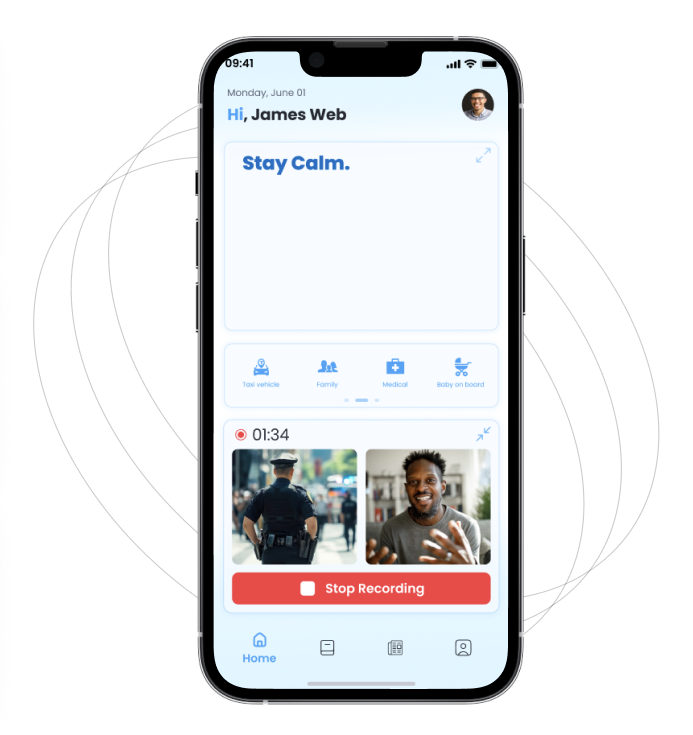
Certified, tamper-proof recordings
Every recording includes timestamps, GPS data, and encryption that proves authenticity.
Automatic cloud backup
Your evidence is safe — even if your device is damaged or confiscated.
Real-time rights guidance
You stay calm, informed, and legally protected.
Secure storage for documentation
Everything you record remains private until you share it.
This kind of evidence carries more legal weight than ordinary phone videos because it proves when, where, and how the recording happened.
When filing a complaint, that level of verification is priceless.
Step-by-Step Guide: How to File a Police Complaint
Filing a complaint can feel intimidating, especially if you’ve never done it before.
Here’s the process broken down in a clear, manageable way.
Step 1: Write Down Everything You Remember
The sooner you do this, the better.
Include:
Date and time
Location
Officer name or badge number
Police car number
What was said
What actions were taken
Who else was present
Even small details help investigators.
If you used the H.E.L.P. App, review your footage to ensure your notes are accurate and complete.
Step 2: Collect and Organize Your Evidence
Create a simple folder (digital or physical) and include:
Your video recordings
Screenshots
Photos
Witness information
Medical documents
Any tickets or paperwork
A copy of your notes
The more organized your evidence, the stronger your complaint.
Step 3: Decide Where to File
Police complaints can typically be filed with:
✔ Internal Affairs Division (IAD)
Every police department has one.
✔ Civilian Review Board
Not all cities have these, but many do.
✔ Police Chief or Sheriff’s Office
Some jurisdictions require the complaint to be sent directly to leadership.
✔ State Attorney General
For serious or statewide misconduct issues.
✔ U.S. Department of Justice, Civil Rights Division
For civil rights violations or patterns of abusive behavior.
In most jurisdictions, filing is free and public.
If the misconduct was severe, filing in multiple places is acceptable and sometimes recommended.
Step 4: Fill Out the Complaint Form (Online or In Person)
Most departments offer:
Online complaint portals
PDF complaint forms
In-person filing at police headquarters
Email submissions
Phone intake (less common)
The form will ask for:
Your contact information
Incident details
Officer information
Description of misconduct
Evidence attachments
Be factual, clear, and calm.
Avoid emotional language — let the evidence speak.
Step 5: Submit Your Evidence
If using the H.E.L.P. App:
Download your recording
Attach it directly to the complaint
Include the metadata package if available
Provide a short description of the video
Departments are more likely to take complaints seriously when evidence is certified and tamper-proof.
Step 6: Ask for a Tracking or Case Number
This ensures:
Your complaint is logged
You can request updates
You have proof of submission
Never leave without a tracking number.
Step 7: Follow Up
Internal affairs may take:
Days for minor issues
Weeks or months for serious complaints
Follow up with:
Emails
Phone calls
Written requests for updates
You have the right to know the status of your complaint.
What to Expect During the Investigation
Once your complaint is submitted:
✔ A case number is assigned
This begins the official record.
✔ Internal affairs contacts all involved parties
Witnesses, officers, and sometimes you.
✔ Your evidence is reviewed
This is where H.E.L.P. App recordings make a huge difference.
✔ Body camera footage is pulled
This compares your version of events with official recordings.
✔ Supervisors review policies
They determine whether actions violated department rules.
✔ A conclusion is reached
Outcomes may include:
Sustained (complaint validated)
Not sustained (not enough evidence)
Exonerated (officer acted appropriately)
Unfounded (incident didn't occur)
You should receive a written notice of the result.
What If You’re Afraid of Retaliation?
This is a common and understandable fear.
Federal law prohibits retaliation for filing a complaint.
Most departments also explicitly forbid:
Harassment
Unnecessary stops
Threats
Intimidation
“Blacklisting” by officers
If you fear retaliation:
Use the H.E.L.P. App to document interactions
Report all suspicious behavior immediately
File complaints in multiple oversight locations
Contact a civil rights attorney
Share evidence with trusted contacts
Your safety is the priority — and transparency is your shield.
When You Should Consult an Attorney
Not every complaint requires a lawyer, but some do.
Consult an attorney if:
You were injured
You were wrongfully arrested
Children were involved
An officer used force
Your property was damaged
You faced discrimination
You believe your rights were violated
Your complaint is being ignored
Even a short consultation can protect your rights and strengthen your case.
How the H.E.L.P. App Makes Your Complaint Stronger
Every complaint is only as strong as the evidence supporting it.
That’s why the H.E.L.P. App gives you:
✔ Objective documentation
Not opinions — facts.
✔ Uneditable proof
Your recording can’t be manipulated.
✔ Secure cloud storage
Evidence can’t be erased or destroyed.
✔ Rights reminders
Helping you stay calm and compliant during the encounter.
✔ A complete record
Timing, location, behavior — all captured clearly.
Proper evidence can be the difference between a complaint being dismissed — or taken seriously.
The H.E.L.P. App gives citizens power they’ve never truly had before.
Final Thought: Filing a Complaint Is Your Right — and Your Voice Matters
Police complaints aren’t about revenge.
They’re about accountability, safety, fairness, and reform.
Your complaint:
Protects future citizens
Holds officers to professional standards
Strengthens community transparency
Encourages responsible policing
Creates a documented record of behavior
Empowers others to speak up
And when your complaint is supported by clear, certified evidence from the H.E.L.P. App, your voice becomes impossible to ignore.
You deserve to feel safe.
You deserve to be heard.
And you deserve tools that protect your rights when it matters most.
Download the H.E.L.P. App Today
Protect your truth. Protect your evidence. Protect your future.