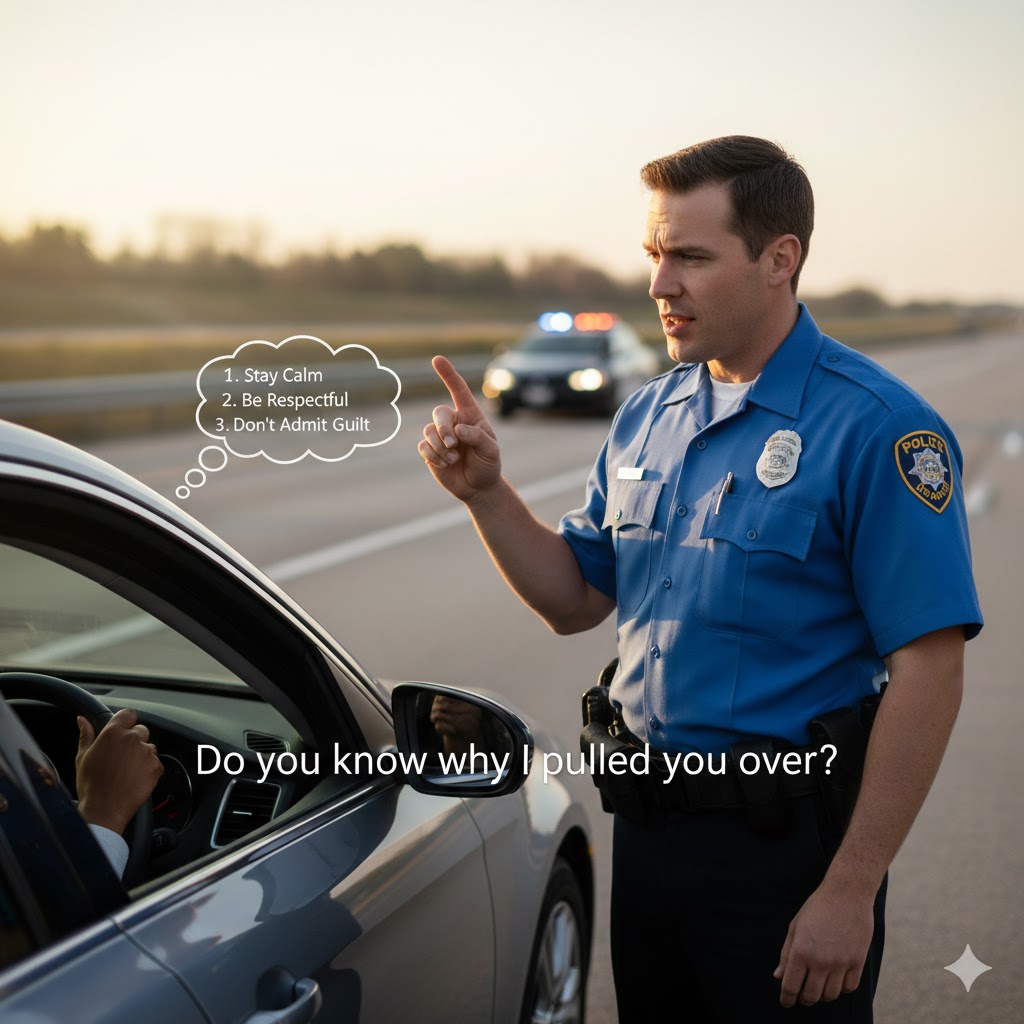
How to Handle the Question: “Do You Know Why I Pulled You Over?”
Few questions trigger anxiety as quickly as “Do you know why I pulled you over?” Even confident, law-abiding drivers feel their stomach drop when they hear it—your mind races. You replay the last few minutes of driving. You wonder if this is a test, a trap, or just small talk. The pressure to answer correctly can feel overwhelming.
This moment matters more than most people realize. How you respond can shape the entire encounter. Many drivers unintentionally talk themselves into tickets, citations, or longer stops simply by answering too quickly or too honestly.
This guide explains how to handle that question calmly, legally, and intelligently. It breaks down why officers ask it, what they are really listening for, and how to respond in a way that protects you without escalating the situation. The goal is not to “beat” the system. The goal is clarity, composure, and control when it matters most.
Why Officers Ask This Question in the First Place
The question “Do you know why I pulled you over?” serves several purposes. It is not random, and it is rarely casual.

Officers ask it to:
Assess your awareness
Gauge your honesty
Observe your demeanor
Potentially obtain an admission
See how you handle pressure
It is an open-ended question, which means the answer comes entirely from you. Anything you say becomes part of the interaction and may be documented later.
Understanding the purpose behind the question changes how you approach it.
What Many Drivers Get Wrong Immediately
The most common mistake drivers make is trying to guess. They scan their memory and say something like, “Was I speeding?” or “Maybe I rolled through that stop sign?” Even if spoken casually, those statements can be treated as admissions.
Another common mistake is overexplaining. Drivers launch into long narratives about traffic, weather, stress, or being late. While well-intentioned, these explanations often introduce unnecessary details that complicate the stop.
Some drivers respond defensively or sarcastically, which can escalate tension. Others freeze and blurt out whatever comes to mind.
None of these responses protect you.
Why Guessing Is Almost Always a Bad Idea
Guessing gives the officer information they may not have had before. If the officer stopped you for one reason and you guess another, you have now added a second issue into the conversation.
For example, if you were stopped for a broken taillight and you say, “Was I speeding?” you have just introduced speed into the interaction. Even if you were not speeding, you have created confusion and risk.
Guessing feels cooperative, but it often backfires.
The Psychological Pressure Behind the Question
This question works because humans want to be helpful. We are conditioned to answer questions politely and quickly. Silence feels awkward, and uncertainty feels uncomfortable.
Officers know this. The question is designed to see how you respond under mild stress. Your tone, speed, and confidence all communicate information.
That does not mean the officer is trying to trick you. It means the interaction is structured. Understanding that structure helps you navigate it calmly.
What You Are Actually Required to Say
In most traffic stops, you are required to:
Provide your driver’s license
Provide registration and insurance when requested
Follow lawful instructions
You are not generally required to explain your driving or speculate about violations. The question “Do you know why I pulled you over?” is usually not a legal requirement. It is a conversational prompt.
That distinction is critical.
A Calm, Protective Response That Works
One of the safest responses is simple and neutral:
“I’m not sure.”
This answer does not admit guilt. It does not challenge authority. It does not escalate tension. It simply declines to speculate.
Another effective option is:
“No, officer.”
Short, calm, respectful, and complete.
These responses allow the officer to state the reason for the stop without you volunteering information.
What Happens After You Say ‘I’m Not Sure’
When you respond neutrally, the officer typically explains the reason for the stop. This shifts the interaction from speculation to information.
Once the officer states the reason, you can listen calmly. You do not need to agree, argue, or explain. Acknowledging that you understand is enough.
At this point, the encounter becomes more predictable and less stressful.
Why Silence Is Not Rude
Many people worry that saying very little will seem disrespectful. In reality, tone matters more than content.
You can be polite, calm, and cooperative without filling the silence. Silence is not defiance. It is restraint.
Officers encounter many different communication styles. Neutral, respectful brevity rarely causes problems.
What Not to Say (Even If It Feels Honest)
Avoid statements like:
“I was probably going a little fast.”
“I didn’t see the sign.”
“I know I shouldn’t have done that.”
“Everyone else was doing it.”
“I’m late for work.”
These statements may feel harmless, but they create records that can be used later.
Honesty does not require self-incrimination.
How This Question Affects the Length of the Stop
Drivers who overexplain often experience longer stops. Additional details lead to more questions. More questions lead to more time.
Short, neutral answers keep the interaction focused. Focused interactions tend to end faster.
Efficiency benefits everyone.
Handling the Question When You Are Nervous
Nervousness is normal. You can manage it by:
Taking a slow breath before answering
Keeping your hands visible
Speaking slowly
Using simple sentences
You are allowed to pause before responding. A brief pause shows thoughtfulness, not guilt.
Why Recording Can Reduce Anxiety in This Moment
One reason this question feels so stressful is fear of misremembering what was said later. Documentation reduces that fear.

Using a tool like the H.E.L.P. App (Helping Ensure Legal Protection) allows you to discreetly record the interaction with automatic cloud backup and verified timestamps. This removes the pressure to remember every word perfectly.
When evidence is preserved, anxiety decreases.
How the H.E.L.P. App Supports Calm Responses
The H.E.L.P. App is designed for moments like this. It allows one-touch recording without fumbling, which helps you stay focused on the interaction instead of your phone.
Knowing the interaction is documented allows you to respond calmly rather than defensively. Calm behavior often leads to calmer encounters.
What If the Officer Pushes for an Answer
Sometimes officers follow up with, “You really don’t know?” or “Take a guess.”
You can calmly repeat:
“I’m not sure, officer.”
Consistency is key. You do not need to justify your response.
Repeating yourself calmly is not disrespectful. It is clear.
Handling This Question as a New Driver
New drivers often feel extra pressure to answer “correctly.” They worry about seeming inexperienced or uncooperative.
In reality, new drivers benefit most from neutral responses. Guessing increases risk, especially when still learning the rules.
Teaching this skill early builds confidence.
Handling This Question Late at Night
Nighttime stops can feel more intense. Visibility is lower, fatigue is higher, and nerves are amplified.
The same principles apply:
Slow down mentally
Answer neutrally
Avoid speculation
The time of day does not change your rights.
Why This Question Is Not a Moral Test
Many people interpret the question as a test of honesty or character. It is not.
It is a procedural question within a structured interaction. Treating it as such removes unnecessary emotion.
You are not being graded on personality. You are navigating a process.
How to Prepare for This Question Before It Happens
Preparation reduces panic.
You can prepare by:
Deciding your response ahead of time
Practicing it out loud
Teaching it to family members
Keeping reminders accessible
Prepared responses become automatic under stress.
Teaching Loved Ones How to Handle This Question
If you care about someone who drives frequently, share this information.
Explain that:
They are not required to guess
Neutral answers are safest
Calm matters more than explanation
This knowledge protects people you care about.
What If You Truly Know Why You Were Stopped
Even if you believe you know the reason, you are not required to state it. Knowing and saying are different.
Let the officer explain. This preserves clarity and prevents miscommunication.
Why Staying Neutral Protects Everyone
Neutral responses reduce:
Misunderstandings
Escalation
Emotional reactions
Documentation errors
They protect drivers and officers alike.
The Bigger Lesson Behind This Question
This question highlights a broader principle: you do not need to fill silence during police encounters.
Less is often more.
Why This Is About Empowerment, Not Avoidance
Handling this question wisely is not about avoiding responsibility. It is about navigating a high-pressure situation with composure.
Empowerment comes from understanding the process, not fearing it.
Final Thoughts
“Do you know why I pulled you over?” feels simple, but it carries weight. The best response is calm, neutral, and brief.
You do not need to guess. You do not need to explain. You do not need to argue.
You just need to stay composed.
Take the Next Step
If you want added confidence during traffic stops and other encounters, consider tools designed to support calm behavior and preserve clarity.