How to Safely Record a Police Interaction as a Bystander | A Step-by-Step Guide
Most people don’t expect to become witnesses. You step outside to grab coffee, wait for a rideshare, or walk your dog, and suddenly you see flashing lights or hear raised voices. A police interaction is unfolding nearby. Your instincts kick in. You wonder whether to look away, walk past, or pull out your phone.
This moment matters more than many people realize.
Bystander recordings have changed how communities understand police encounters. They’ve clarified misunderstandings, exposed misconduct, protected officers from false claims, and created accountability where memory alone would fail. But recording responsibly is not as simple as pressing “record.”
This guide explains how to record police as a bystander safely, legally, and effectively. It’s written for everyday people who want to do the right thing without escalating a situation or putting themselves at risk. We’ll cover your rights, common mistakes, step-by-step actions, and how tools like the H.E.L.P. App can help when it matters most.
Why Bystander Recording Matters
Bystander recordings provide something that memory cannot: objective context. When tensions are high, people tend to remember events differently. Video preserves tone, timing, and behavior in ways written statements never can.
Recording isn’t about confrontation. It’s about clarity.
When done properly, bystander footage can:
Protect individuals involved
Protect officers acting professionally
Provide evidence for investigations
Reduce false accusations
Encourage de-escalation
In many cases, the simple presence of a camera encourages everyone to remain calmer and more professional.
Is It Legal to Record Police as a Bystander?
In the United States, the general answer is yes. Courts have consistently recognized the First Amendment right to record police officers performing their duties in public, as long as you do not interfere.

That said, laws vary slightly by state, especially around audio recording. Most states follow one-party consent rules, while a few require all-party consent. Importantly, courts have ruled that police officers performing official duties in public spaces do not have a reasonable expectation of privacy.
What matters most is how you record.
You must:
Remain in a public space
Avoid interfering
Follow lawful orders
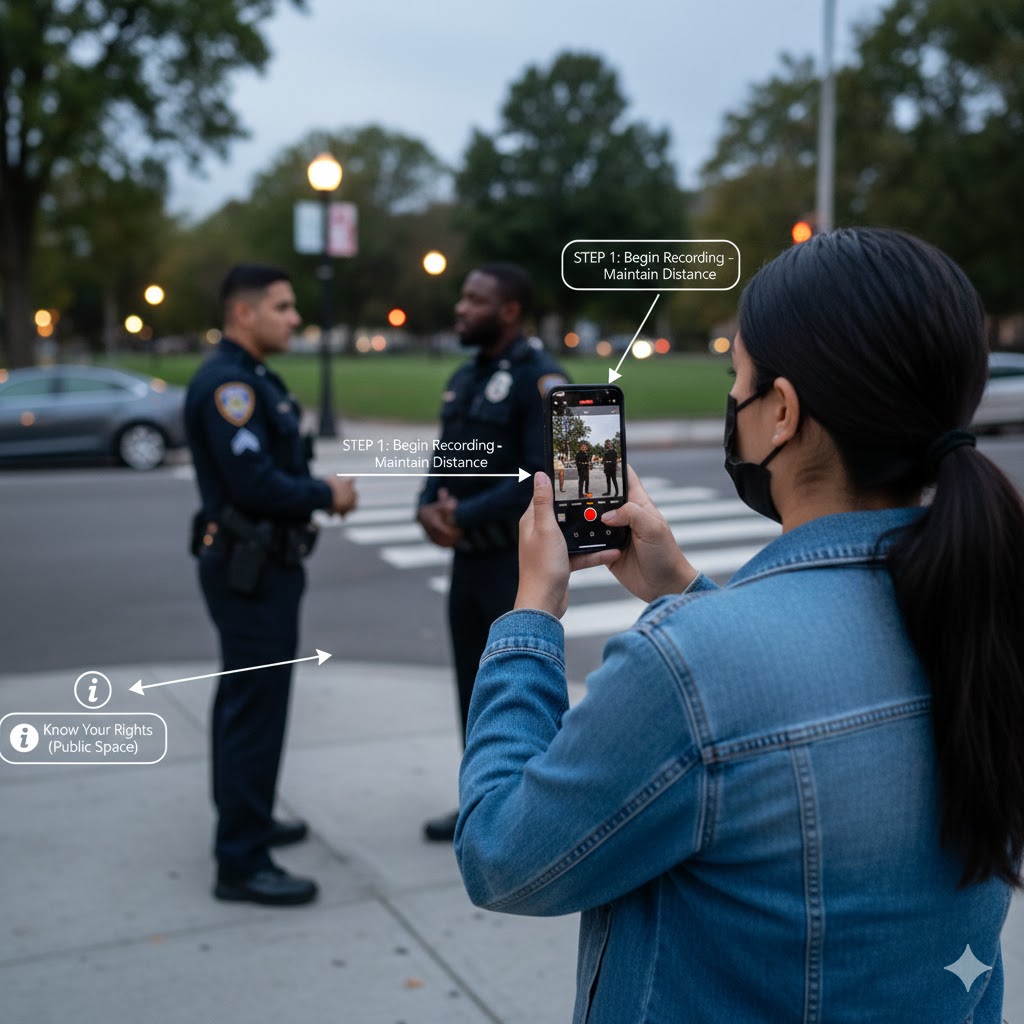
Maintain a safe distance
Knowing your rights ahead of time reduces fear and prevents mistakes.
What “Do Not Interfere” Actually Means
This is where most bystanders get confused.
Interference does not mean “recording.”
Interference means actions that obstruct police duties.
Examples of interference include:
Standing too close
Blocking movement
Yelling instructions
Touching officers or subjects
Refusing lawful orders to move back
Recording from a reasonable distance while remaining silent is almost always lawful.
Think observe, not engage.
Step 1: Assess the Scene Before You Record
Before pulling out your phone, take a second to read the environment.
Ask yourself:
Am I in a public place?
Can I record without stepping closer?
Is there immediate danger?
Are emotions already high?
If the scene feels volatile, your first priority is your own safety. Recording should never put you at risk of harm.
Position yourself where you can see clearly without becoming part of the interaction.
Step 2: Start Recording Calmly and Steadily
If you decide to record, do so smoothly. Avoid sudden movements or dramatic gestures. Hold your phone steadily, preferably at chest level.
Do not shout that you are recording.
Do not taunt or provoke.
Do not narrate emotionally.
Silence is powerful.
Your goal is documentation, not commentary.
Step 3: Keep Your Distance and Follow Instructions
If an officer notices you and asks you to move back, comply calmly while continuing to record if possible. Courts have ruled that officers may impose reasonable distance restrictions for safety, but they generally cannot order you to stop recording altogether.
If told to step back:
Take a few steps
Keep recording
Remain silent
Distance does not eliminate your right to document.
Step 4: Do Not Argue on the Scene
Even if you believe your rights are being violated, the sidewalk is not the courtroom.
Arguing in the moment can escalate the situation and put you at risk. If an officer gives an order you believe is unlawful, comply peacefully and document everything.
Your evidence is stronger than any argument you could make in the moment.
Step 5: Capture Context, Not Just the Climax
Many recordings start too late.
If safe, begin recording early and continue until the interaction clearly ends. Context matters. How an interaction begins often explains how it ends.
Key details to capture include:
Time and location
Officer behavior
Tone of voice
Instructions given
Compliance or resistance
Arrival or departure of backup
Do not zoom excessively or jump around. Let the camera tell the story.
Step 6: Preserve the Recording Immediately
One of the biggest mistakes bystanders make is failing to secure the footage.
Phones get lost. Files get corrupted. Videos get deleted.
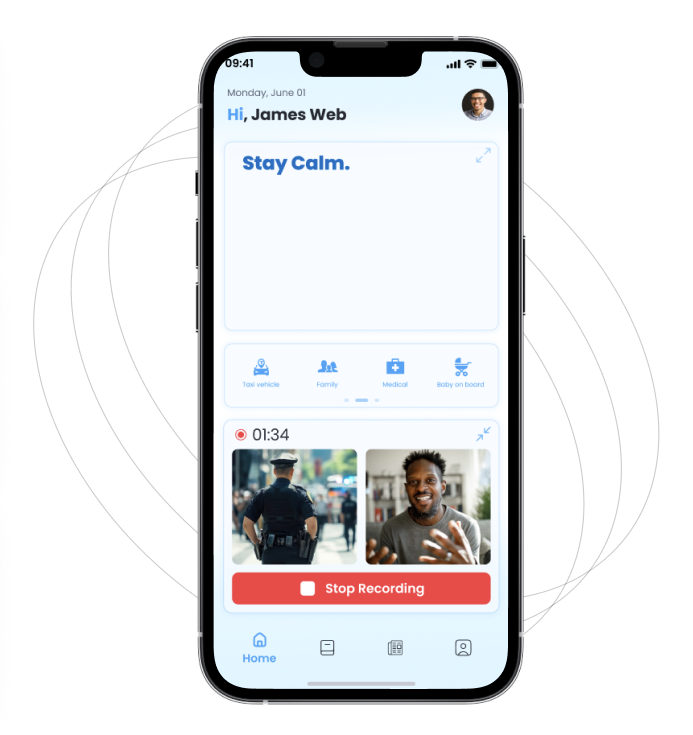
This is where the H.E.L.P. App (Helping Ensure Legal Protection) becomes critical.
The H.E.L.P. App allows recordings to be:
Instantly activated
Automatically backed up to the cloud
Timestamped and location verified
Stored securely and privately
This protects evidence even if your phone is damaged or confiscated.
Why the H.E.L.P. App Is Ideal for Bystanders
Most camera apps were not designed for high-stress situations.
The H.E.L.P. App was.
It minimizes fumbling, preserves evidence automatically, and provides guidance on your rights. For bystanders, this means less panic and better documentation.
Recording responsibly is easier when the technology supports you.
Step 7: Do Not Share Immediately on Social Media
Posting footage in real time can:
Spread misinformation
Escalate tensions
Compromise investigations
Endanger people involved
Responsible recording includes responsible sharing.
If the footage may be needed as evidence, preserve it first. Share later, thoughtfully, and when appropriate.
Step 8: Decide What to Do After the Interaction
Once the scene ends, take a moment.
Ask yourself:
Was anyone harmed?
Does the footage show potential misconduct?
Could it help clarify events?
In some cases, the best choice is to retain the recording privately. In others, it may be appropriate to:
Provide it to the individual involved
Share it with an attorney
Submit it to a civilian review board
Cooperate with investigators
There is no single correct answer. Context matters.
Common Mistakes Bystanders Should Avoid
Avoid these pitfalls:
Getting too close
Narrating emotionally
Engaging verbally
Ignoring lawful orders
Failing to back up footage
Posting without context
Being helpful means being disciplined.
How Bystander Recording Protects Officers Too
This conversation is often framed as “citizens versus police,” but that’s incomplete.
Recording protects officers who act professionally. It disproves false allegations and provides clarity when accounts conflict.
Transparency benefits everyone.
Why Calm Recording De-Escalates Situations
A calm observer sends a powerful signal.
It tells everyone involved:
Someone is watching
Facts matter
Behavior is visible
Escalation won’t go unnoticed
This often leads to more measured behavior on all sides.
What to Do If an Officer Tells You to Stop Recording
If told to stop:
Stay calm
Ask politely, “Am I being detained?”
If ordered to move, comply
Continue recording if lawful
Do not physically resist or argue.
Courts have repeatedly affirmed the right to record in public spaces.
Understanding Bystander Recording Rights in Plain Language
You have the right to:
Record from public spaces
Document police performing public duties
Preserve evidence
You do not have the right to:
Interfere
Obstruct
Ignore lawful safety orders
Knowing the difference keeps you protected.
Why Preparation Matters Before You Ever Witness a Stop
The best time to learn this information is before you need it.
Install the right tools. Understand your rights. Decide how you’ll act under pressure.
Prepared bystanders are safer bystanders.
Teaching Others to Record Responsibly
Share this knowledge with friends, family, and community members.
Responsible recording is a community skill. The more people understand how to do it properly, the safer everyone becomes.
When Not to Record
There are moments when recording may not be appropriate:
Medical emergencies where privacy is critical
Situations where recording increases danger
Private spaces where consent is required
Use judgment. Safety always comes first.
Why This Guide Exists
The Rights Report exists to make complex civic concepts practical.
Recording police interactions is a powerful right, but only when exercised responsibly.
This guide is about empowerment, not provocation.
The Bigger Picture: Accountability Without Chaos
Accountability does not require hostility.
It requires clarity, documentation, and calm.
Bystander recording done right supports justice without creating new problems.
Final Thoughts
If you ever find yourself witnessing a police stop, remember this:
You don’t have to choose between silence and chaos.
You can record responsibly.
You can stay safe.
You can protect everyone involved by preserving the truth.
Take the Next Step
If you want a safer, calmer way to document important moments, equip yourself with tools designed for real-world encounters.