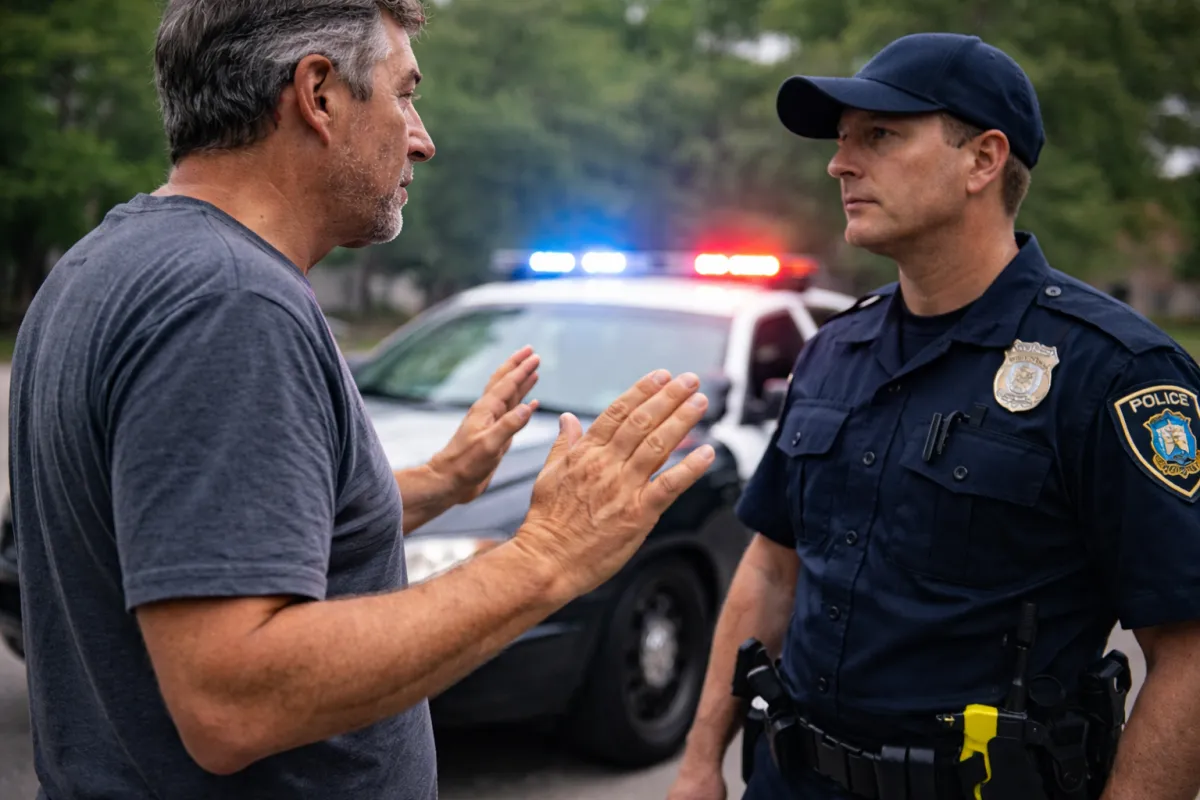
How to Stay Calm, Clear, and Protected During Police Encounters
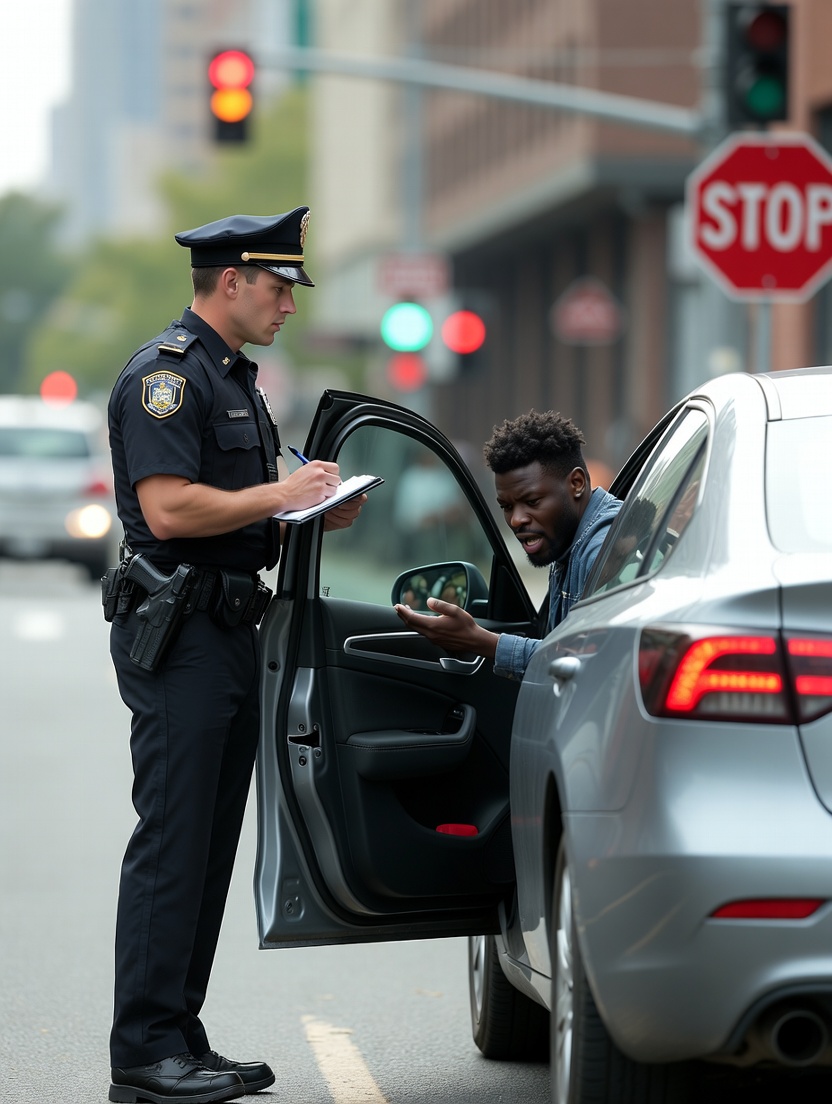
Police encounters can happen without warning — a traffic stop, a sidewalk question, or a knock at your door.
For most people, they are rare. But when they happen, they can feel intense. Your heart rate rises. Your thoughts speed up. Clarity becomes harder to access.
Staying calm, clear, and protected is not about confrontation. It is about preparation — understanding your rights, regulating your response, and preserving accurate documentation if needed.
Why Staying Calm Is Your Strongest Protection
When tension rises, your body shifts into fight-or-flight mode. That response is natural — but in legal situations, reactive behavior increases risk.
Calm behavior:
Keeps your speech clear
Makes your decisions deliberate
Reduces threatening body language
Helps the encounter move smoothly
Calm is not weakness.
Calm is control.
Courts and reviewers often assess demeanor. Composure strengthens credibility. Aggression weakens it.
How to Regulate Your Breathing in the Moment
If you feel adrenaline rising, slow your breathing:
Inhale through your nose for four seconds
Hold for four seconds
Exhale slowly for four seconds
Repeat
This lowers visible tension and stabilizes your voice.
Breathing is your first tool.
Why Body Language Matters During Police Encounters
Officers assess movement quickly.
Avoid sudden gestures
Keep your hands visible
If driving, place your hands on the steering wheel
Move slowly and deliberately
You do not need exaggerated compliance. Intentional, calm movement reduces misunderstanding.
What to Say — and What Not to Say
Clear communication protects you.
Provide required identification when lawfully requested
Avoid volunteering extra information
If you choose not to answer, say so calmly
Example:
“I prefer not to answer that question.”
No sarcasm. No arguments. No raised voice.
For a broader overview of constitutional protections, review the ACLU’s Know Your Rights guide
Avoid Arguing on the Street
If you believe an officer is mistaken, the roadside is not the courtroom.
Arguments rarely change outcomes in the moment. They often increase tension.
Your priority is safety.
Disputes can be handled later — through proper review, documentation, or legal channels.
Recording a Police Encounter: Do It Calmly
Documentation protects clarity.
Recording can preserve:
Tone
Sequence
Instructions given
Compliance shown
If you record:
Do not narrate aggressively
Do not use recording as a threat
Simply document
To better understand your rights when filming in public, see the Electronic Frontier Foundation’s Recording in Public guide
For structured documentation, tools like the H.E.L.P. App (Helping Ensure Legal Protection) allow one-tap recording with secure cloud backup and timestamp protection. Simplicity matters under stress.
Why Timestamps Matter
Sequence determines fairness.
Were instructions given clearly?
Did compliance follow immediately?
Were warnings issued before enforcement?
Accurate timestamps anchor events to real time and prevent confusion later.
As explained in What Happens After the Camera Stops Rolling? The Role of Evidence
preserved evidence often matters more after the encounter than during it.
The Right to Remain Silent — Used Calmly
In many situations, you have the right to remain silent.
Silence is not guilt. It is a constitutional protection.
But silence should be calm, not defiant.
Polite restraint reduces escalation.
How to Respond to “Do You Know Why I Stopped You?”
This question often invites admission.
A safe, neutral response:
“I’m not sure.”
Avoid guessing. Avoid explaining unnecessarily.
Clarity protects your position.
Consent to Search: Be Clear and Respectful
You may be asked to consent to a search of your vehicle or belongings.
In many situations, you have the right to decline consent.
A calm response:
“I do not consent to a search.”
Do not physically resist.
Do not argue.
State your position clearly and respectfully.
Keep the Encounter Short
Longer interactions create more room for tension.
Answer required questions
Follow lawful instructions
Avoid unnecessary conversation
Shorter encounters reduce risk.
Why Documentation Protects You Later
An encounter may last minutes.
Its consequences may last months.
Documentation can protect you if:
A citation is contested
A complaint is filed
A report contains inaccuracies
As discussed in How One Recording Can Clarify an Entire Encounter
a single accurate recording can reshape a disputed narrative.
For research and broader context on policing standards, see the National Institute of Justice – Police Community Relations resources
Never Use Physical Resistance
Even if you believe something is unlawful, physical resistance increases danger.
State your objection verbally.
Comply physically if required.
Document calmly.
Safety first. Disputes later.
Knowing Your Rights Reduces Anxiety
Fear often comes from uncertainty.
Understanding your rights regarding silence, consent, and documentation reduces visible panic and increases confidence.
For federal civil rights enforcement information, review the U.S. Department of Justice – Civil Rights Division
Preparation creates confidence.
Confidence reduces escalation.
De-Escalation Phrases That Work
Simple language can reduce tension:
“I understand.”
“I’m not trying to cause problems.”
“I want this to go smoothly.”
You do not need to agree. You need to signal cooperation.
This aligns with The Calm Approach: How to Assert Your Rights Without Escalating a Situation
Why Transparency Supports Fairness
Smartphones changed accountability.
Documentation clarifies memory differences and protects dignity on all sides.
As explored in Why Transparency Protects Truth — Even When Memories Don’t Match
accurate records strengthen fairness — not conflict.
After the Encounter Ends
Once it is safe:
Write down what happened
Save recordings securely
Avoid immediate public posting
Consult a qualified attorney if needed
Careful follow-up preserves options.
Final Thoughts
Police encounters can feel overwhelming.
But they do not have to control you.
Stay calm.
Move deliberately.
Speak respectfully.
Document responsibly.
You do not need confrontation to protect yourself.
You need preparation.
And when preparation meets clarity, fairness has room to work.
Take the Next Step
If you believe in being prepared before high-stress moments occur, consider equipping yourself with reliable documentation tools built for real-world encounters.
Learn more about the H.E.L.P. App
Preparation is steady.
Preparation protects.

