
How to Teach Your Teen About Police Encounters Responsibly
Raising a teenager today comes with challenges that didn’t exist twenty or even ten years ago. Social media, technology, changing laws, and community–police relations all shape the world our kids move through. But one conversation has become especially important for today’s families:
How should a teen handle a police encounter — safely, calmly, and responsibly?
Whether your teen is learning to drive, walking home from school, hanging out with friends, or simply existing in the wrong place at the wrong time, knowing what to do in these moments is critical. And as a parent, guardian, or mentor, it’s your responsibility to prepare them — not scare them, not shame them, but educate them.
This guide breaks down exactly how to teach your teen about police encounters in a way that:
Builds confidence
Reduces fear
Strengthens safety
Promotes accountability
Protects their rights
Respects law enforcement
Aligns with real-world situations
And just as importantly, we’ll show how tools like the H.E.L.P. App (Helping Ensure Legal Protection) can support your teen when you’re not there.
Let’s get into it.
Start With Calm, Not Fear
Most parents begin the “police encounter talk” with warnings:
“Don’t do this.”
“Don’t say that.”
“Be careful.”
But fear-based conversations can backfire. Teens shut down. They get defensive. They imagine worst-case scenarios instead of practical steps.

Instead, begin with:
A calm tone
A supportive message
A simple fact: “This conversation is about safety, not fear.”
Explain:
“Most officers want to go home safe. You want to go home safe. This conversation teaches you how to help make that happen.”
This reframes the whole topic.
Your teen listens differently.
They feel empowered, not targeted.
Explain What a Police Encounter Actually Is
Teens often imagine Hollywood moments:
Flashing lights
Raised voices
Dramatic tension
But most encounters are routine — traffic stops, ID checks, misunderstandings, or quick questions.
Teach them the basics:
A police encounter is simply a moment of contact.
It could be:
During a traffic stop
At a mall
On the sidewalk
Outside a school game
Walking with friends
Riding in a car that gets pulled over
Not every encounter means danger.
Not every encounter means someone did something wrong.
The goal is not to panic — it’s to stay aware.
Teach the Three Most Important Rights
Teens don’t need a law degree.
But they do need the three rights that matter most in the moment.
Right #1: The Right to Remain Silent
They can politely say:
“I choose to remain silent.”
Except for providing identification during a lawful stop, they don’t have to answer investigative questions.
Right #2: The Right to Refuse Consent to a Search
Officers can ask to search a car, bag, or pockets.
Your teen can say:
“I do not consent to a search.”
This does not stop an officer if they have legal grounds — but it protects your teen legally later.
Right #3: The Right to Record
Under U.S. law, they can record police as long as they don’t interfere.
That’s where the H.E.L.P. App becomes essential:
Shake-to-record activation
Automatic cloud upload
Timestamp + GPS metadata
Encrypted storage
Real-time rights guidance
Teens especially need the reassurance that the app protects them even if they lose their phone or lose control of the situation.
Practice the Four Rules of Respectful Conduct
Respect isn’t about submission — it’s about safety.
Teach your teen these four rules:
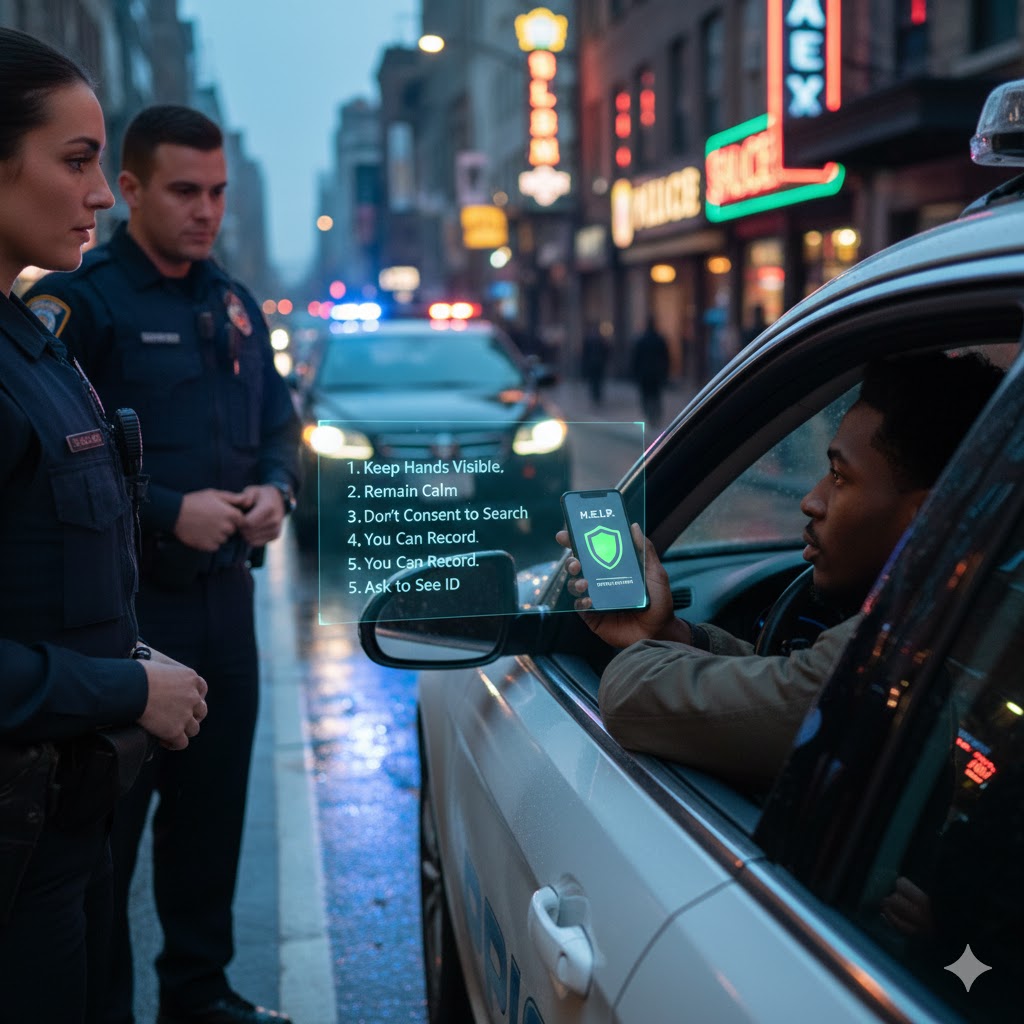
1. Hands Visible
Always keep hands where the officer can see them.
No quick movements.
No reaching suddenly.
2. Calm Tone
Lower your voice.
Speak clearly.
Don’t get sarcastic.
Don’t mumble.
3. Slow Movements
If asked for ID:
“Officer, I am going to reach for my wallet now. It’s in my right pocket.”
Slow, predictable movement reduces tension.
4. Follow Lawful Orders — Even If You Disagree
They can challenge the encounter later.
Not on the street.
Teach them:
“Comply now, contest later.”
This one lesson alone has saved countless lives.
Introduce the H.E.L.P. App as a Tool, Not a Weapon
Teens need something practical. Something real. Something they can use.
The H.E.L.P. App is one of the most responsible tools you can give them.
Demonstrate how it works:
“Shake your phone — that’s it.”
“No unlocking. No fumbling.”
“Your recording uploads instantly.”
“If your phone drops, the video is still safe.”
“It also shows your rights onscreen so you don’t forget.”
Explain why this helps:
It keeps them calm
It avoids escalation
It protects them from misunderstanding
It protects officers from false claims
It documents the facts
It creates transparency
Tell them:
“This app isn’t about catching anyone. It’s about protecting the truth.”
Teens respond well to that.
Practice Real-Life Scenarios
Education becomes powerful through practice.
Sit with your teen and run through scenarios:
A traffic stop while driving
Being a passenger
Walking home at night
Hanging out in a group
An officer asking questions
An officer asking for a search
A mistaken-identity situation
For each scenario, ask:
“What do you do with your hands?”
“What do you say?”
“When do you start recording?”
“How do you stay calm?”
Practice until their responses feel natural, not forced.
Because in real life, panic erases memory.
Practice builds instinct.
Teach Them When to Call You — and When to Stay Silent
Your teen needs clear rules:
Call you immediately if:
They’re being detained
Their car is being searched
They’re told they’re a suspect
They’re asked to step out of the car
They feel unsafe
Stay silent if:
They feel pressured to “explain”
They feel accused
The officer asks leading questions
They feel emotional
Remember: silence is a right, not an admission.
Explain What “De-escalation” Really Means
Teens hear the word everywhere, but rarely understand it.
De-escalation is simply lowering the temperature.
Show them how:
Don’t raise your voice
Don’t argue
Don’t match the officer’s mood
Don’t interrupt
Don’t make sudden movements
Don’t assume the worst
Don’t get defensive
Teach them:
“Being calm doesn’t mean you’re weak — it means you’re smart.”
And the H.E.L.P. App directly supports this:
On-screen instructions help them stay focused
The recording reassures them
The automatic backup relieves fear
The presence of documentation often calms both sides
De-escalation protects everyone involved.
Review What Happens After an Encounter
Teens often think the moment ends when the officer walks away.
Teach them the next steps:
Save the recording
Write down details
Store everything in the Evidence Vault
Share recordings with you if needed
Ask questions about what they experienced
Talk through what they did well
Discuss anything they should improve
This builds maturity — and improves future encounters.
Remind Them: Police Are People Too
A balanced lesson matters.
Teach your teen:
Officers have stress
Officers make mistakes
Officers are trained differently
Officers want safety too
Officers respond better to calm communication
Humanizing both sides helps prevent fear-based reactions.
Final Thought: Empowerment Is the Goal — Not Fear
Teaching your teen about police encounters isn’t about preparing for the worst.
It’s about preparing them to stay:
Safe
Calm
Aware
Respectful
Confident
Protected
And when you add tools like the H.E.L.P. App, you’re giving them more than instructions — you’re giving them real support, real protection, and a real safety net you can trust.
Whether they’re driving, walking, traveling, or simply out with friends, you’ll know they have:
Knowledge
Confidence
Guidance
Technology
Automatic evidence protection
And most importantly — a plan.
Download the H.E.L.P. App for Your Teen Today
Give them the protection, clarity, and confidence they deserve.

