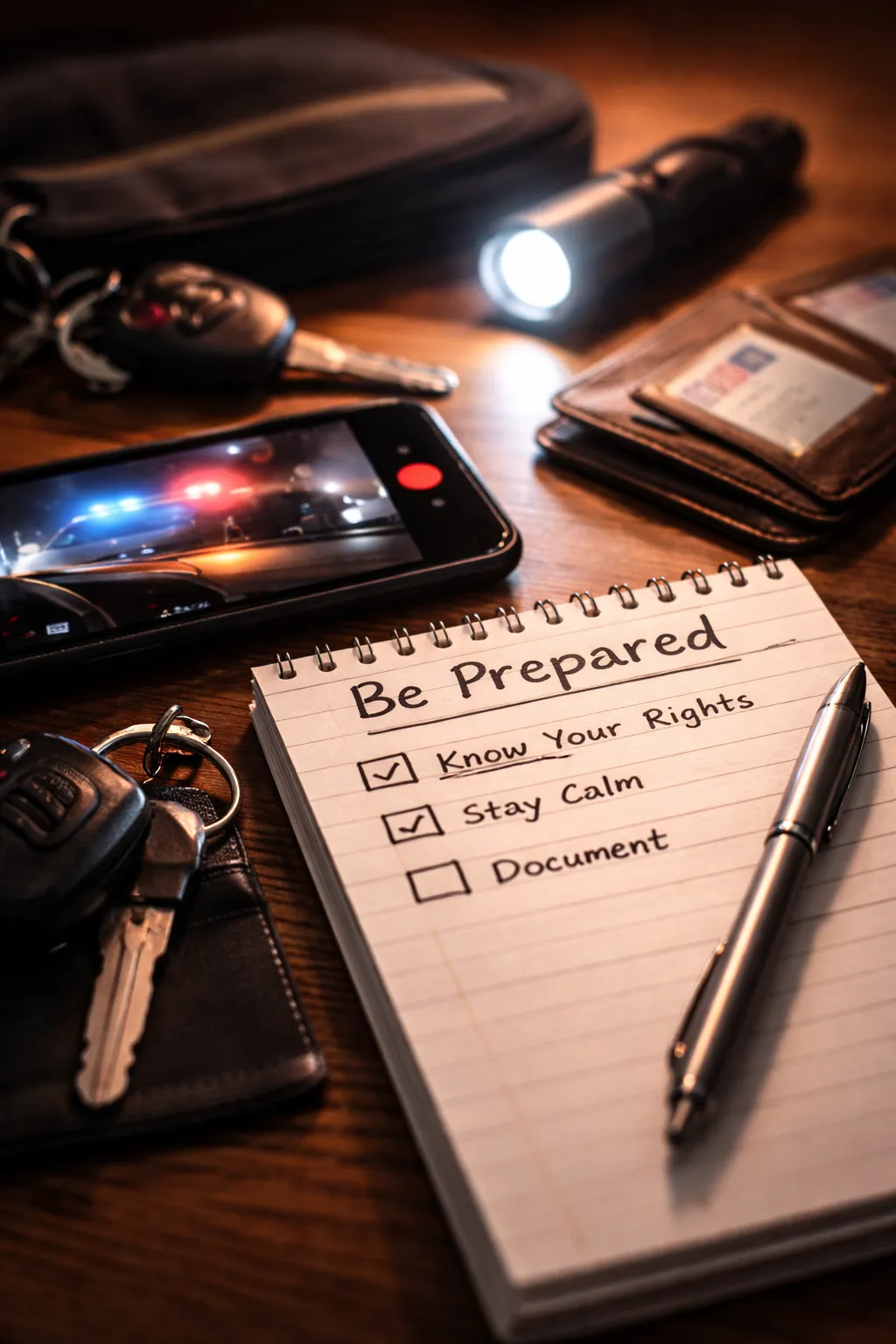
Safety Isn’t About Arguing — It’s About Being Ready
There’s a common misconception about personal safety. Many believe it means standing your ground loudly, proving a point, or out-arguing whoever is in front of you.
In reality, real safety is quiet, controlled, and prepared. When encounters become tense—especially during traffic stops or interactions with authority—arguing rarely protects you. Instead, ensures your rights remain intact long after the moment ends. Safety isn’t about winning a roadside debate; it’s about being ready for whatever comes next.
Why Arguments Increase Risk (and Preparation Lowers It)
When a situation is challenged, adrenaline naturally kicks in. Your heart rate rises, and you may feel an urge to assert dominance. While arguing can feel empowering in the short term, safety is about reducing risk, not feeling powerful.
High tension leads to unpredictability, which increases the chance of a . Preparedness, on the other hand, allows you to maintain control over your body language and responses.
The Impact of Stress on Legal Credibility
Under stress, your nervous system can override careful thinking. You might speak too quickly, interrupt, or move suddenly. Even if your position is legally correct, an emotional delivery can complicate your standing.
Visible calm reduces escalation. By maintaining a steady tone and deliberate movements, you communicate confidence rather than defensiveness.
What True Readiness Looks Like
Readiness is not aggression; it is awareness paired with a strategy. Being ready means knowing your rights, understanding when to stay silent, and having the right tools prepared in advance.
1. Controlled Breathing and Movement
The fastest way to shift from reaction to readiness is through your breath. Simple techniques, like inhaling and exhaling for four seconds, stabilize your voice and posture.
Similarly, . If you need to reach for your ID, always announce it first: “I’m going to reach for my license now.”
2. Strategic Silence
You are not required to fill every silence or answer every question. You can maintain your boundaries respectfully by saying, “I prefer not to answer that.” This keeps the interaction focused and prevents you from unintentionally volunteering unnecessary information.
3. Professional Documentation
Documentation is not an act of confrontation; it is an act of clarity. Recording an encounter preserves the tone, sequence of events, and your compliance with instructions.
The H.E.L.P. App (Helping Ensure Legal Protection) simplifies this process with one-tap recording and secure cloud backup. Because , having a timestamped, tamper-proof record ensures that the truth is preserved even if your memory fades or your device is damaged.
Why Long-Term Thinking Wins
The roadside is not a courtroom. If you believe a situation is unfair, the most effective strategy is to remain composed and address the dispute later through formal channels. Arguing on the spot rarely changes the immediate outcome, but it can significantly weaken your legal position later.
Transparency Benefits Everyone
Calm documentation encourages professional conduct from all parties involved. When transparency is prioritized, . This approach doesn't just protect the individual; it strengthens the community by ensuring that interactions are based on facts rather than conflicting memories.
Final Thoughts: Empowerment Through Preparation
Staying calm is not an act of submission—it is an act of self-control. When you prioritize long-term safety over short-term pride, you protect your dignity and your future.
Preparation transforms chaos into structure. When you are truly ready, you don’t need to raise your voice. You simply protect yourself calmly and let the clarity of your actions do the work.
Take the Next Step
Real safety begins with readiness. Equip yourself with the tools you need to stay calm, clear, and protected in any situation.

