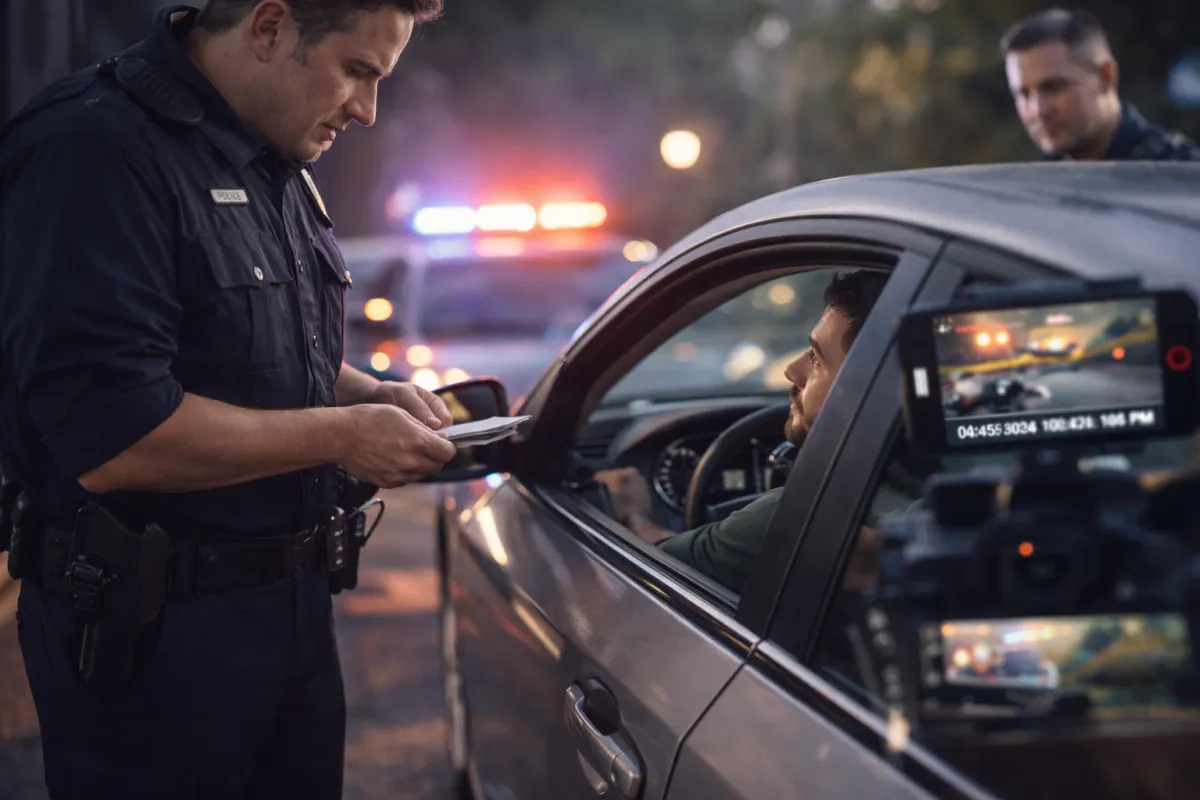
The Psychology of Police Encounters: How to Stay in Control Emotionally
Police encounters are rarely just procedural. They are psychological events. Even when nothing goes “wrong,” people often walk away feeling shaken, irritated, embarrassed, or unsettled. That reaction isn’t weakness—it’s biology. The human nervous system interprets authority, uncertainty, and scrutiny as potential threats, and it responds automatically.

Understanding the psychology behind police encounters is one of the most effective ways to protect oneself. When you understand what your brain and body are doing, you can regain control instead of being swept away by adrenaline, fear, or anger. This guide breaks down why police encounters feel so intense and how to stay emotionally regulated when it matters most.
The goal is not to suppress emotion. The goal is to maintain control over it.
Why Police Encounters Trigger Strong Emotional Reactions
From a psychological standpoint, police encounters activate three core stressors simultaneously: authority, unpredictability, and evaluation. Each one alone can raise stress levels. Together, they almost guarantee a heightened emotional response.
Authority signals a power imbalance. Unpredictability removes your sense of control. Evaluation creates fear of judgment or consequences. Your brain does not wait to analyze the situation logically. It responds instantly by activating the sympathetic nervous system, commonly known as the fight-or-flight response.
Heart rate increases. Breathing becomes shallow. Muscles tense. Thinking narrows. These reactions are automatic, not intentional.
Knowing this changes how you interpret your feelings. You are not “overreacting.” You are responding exactly as a human nervous system is designed to respond.
The Fight-Flight-Freeze Response in Real Life
During police encounters, people often experience one of three responses.
Fight shows up as arguing, sarcasm, defensiveness, or raised voices. Flight appears as nervous chatter, over-explaining, or a strong urge to escape the interaction verbally. Freeze looks like silence, confusion, or difficulty responding at all.
None of these responses mean guilt. They mean stress.
The problem is that these responses can make encounters feel worse or last longer. Emotional regulation is what allows you to interrupt this automatic cycle.
Why “Staying Calm” Is Harder Than It Sounds
Telling someone to “just stay calm” ignores how the brain works. Once the stress response is activated, logical thinking temporarily takes a back seat. That’s why preparation matters more than willpower.

Emotional control during police encounters is not about discipline. It’s about tools. When you have tools, your brain has something to fall back on instead of panic.
The Role of Cognitive Appraisal
Cognitive appraisal refers to how you interpret a situation. Two people can experience the same encounter and walk away feeling completely different based on their interpretation.
If you interpret the encounter as a personal threat, emotions escalate. If you interpret it as a procedural interaction, emotions stabilize.
Reframing does not deny reality. It changes the lens through which your brain processes it.
A helpful internal reframe is: This is a process, not a judgment of me.
That single thought reduces emotional intensity.
Why Silence Feels So Uncomfortable
Silence during police encounters often feels awkward or suspicious because humans are social creatures. We are conditioned to respond to questions and fill conversational gaps.
Psychologically, silence creates uncertainty, and uncertainty triggers anxiety. Many people talk not because they need to, but because silence feels unsafe.
Understanding this helps you tolerate silence without interpreting it as danger. Silence can be a stabilizing tool when used intentionally.
The Emotional Cost of Over-Explaining
Over-explaining is a common anxiety response. It feels like protection, but psychologically it increases vulnerability. Each additional detail gives your brain more to track and worry about later.
After the encounter, over-explainers often replay conversations obsessively, wondering if they said too much. Emotional regulation includes knowing when to stop talking.
Less information means less emotional residue afterward.
Breathing as a Psychological Reset Button
One of the fastest ways to regain emotional control is through breathing. Slow, controlled breathing signals safety to the nervous system.
A simple technique is the extended exhale. Inhale for four seconds, exhale for six seconds. Repeat two or three times.
This shifts your body out of fight-or-flight and back toward balance. It works even when your mind is racing.
Breathing is not just physical—it’s psychological regulation.
Why Body Language Shapes Emotional Outcomes
Your body communicates before your words do. Slouched posture, clenched fists, or rapid movements can intensify stress on both sides of an interaction.
Open posture, visible hands, and slow movements send a signal of non-threat. That signal is processed subconsciously by everyone involved, including you.
Calm body language helps calm your own nervous system as much as it influences others.
The Power of Predictability
The brain feels safest when it knows what to expect. Uncertainty fuels anxiety.
Learning what typically happens during police encounters—requests for identification, questions, instructions—creates predictability. Predictability reduces emotional spikes.
Preparation does not guarantee outcomes, but it reduces surprise, which reduces stress.
Why Documentation Reduces Emotional Fallout
One of the biggest sources of post-encounter stress is uncertainty about memory. People replay events, worried they forgot something important or misremembered details.
Documentation removes that burden. When events are recorded and preserved, your brain doesn’t need to keep revisiting them for protection.
This is one reason tools like the H.E.L.P. App support emotional regulation. Automatic recording and cloud backup reduce the psychological need to stay hyper-alert.
How the H.E.L.P. App Supports Emotional Control
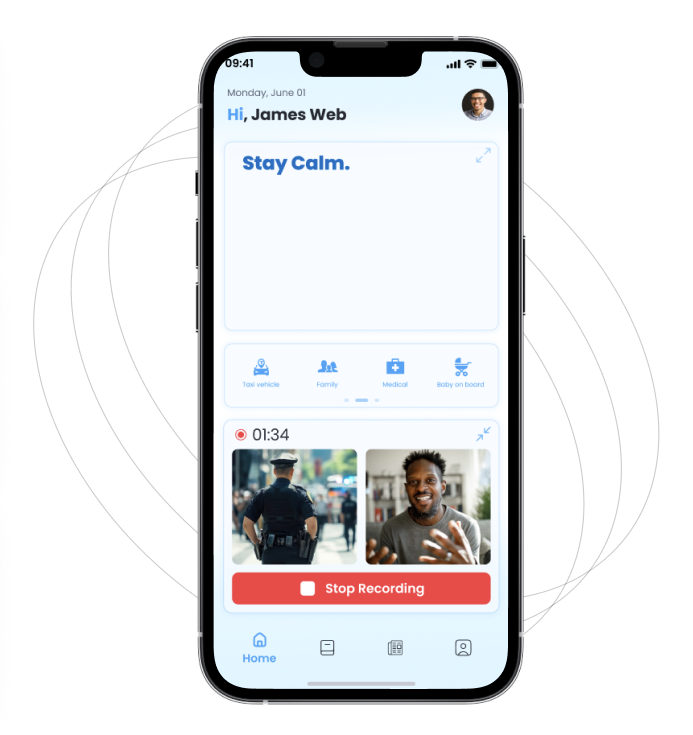
The H.E.L.P. App (Helping Ensure Legal Protection) is not just a legal tool—it’s a psychological one. Knowing that documentation is happening reduces fear of being misunderstood later.
The app’s one-touch activation minimizes fumbling, which keeps your focus on the interaction instead of the device. On-screen guidance reinforces calm, neutral responses instead of emotional reactions.
When your brain knows there is a record, it relaxes.
Why Anger Often Appears After the Encounter
Many people don’t feel angry during the interaction. Anger shows up later, when safety is restored and adrenaline fades.
This delayed anger is a normal response to perceived loss of control. Understanding that helps prevent rumination and resentment.
Healthy processing after the encounter includes acknowledging emotions without feeding them.
Emotional Control Does Not Mean Emotional Suppression
Staying in control emotionally does not mean ignoring feelings. It means choosing when and how to express them.
Police encounters are not the place to process anger or fear. Processing happens afterward, in safe environments.
This distinction protects both your safety and your emotional health.
The Role of Self-Talk in Emotional Regulation
Internal dialogue shapes emotional intensity. Statements like “This is dangerous” or “I’m being targeted” amplify stress.
More helpful self-talk includes:
“I can handle this moment.”
“I don’t need to solve everything right now.”
“This will end.”
These phrases anchor you in the present instead of imagined outcomes.
Why Emotional Control Improves Outcomes
Emotionally regulated individuals tend to experience:
Shorter encounters
Fewer misunderstandings
Less post-event stress
Better recall
More confidence afterward
Control benefits everyone involved.
Teaching Emotional Regulation to Teens and Young Adults
Younger people often struggle most with emotional control during authority interactions because their prefrontal cortex—the part responsible for impulse control—is still developing.
Teaching emotional awareness early prevents mistakes later. Role-playing, discussion, and tools that reinforce calm behavior help bridge that developmental gap.
Why Emotional Control Is a Safety Skill
Safety is often framed as physical, but emotional regulation is a safety skill. It prevents escalation, misinterpretation, and reactive behavior.
Staying emotionally grounded is one of the most protective actions available.
How to Recover Emotionally After an Encounter
After an encounter, give your nervous system time to settle.
Helpful steps include:
Slow breathing
Hydration
Talking to a trusted person
Avoiding immediate rehashing
Rest
Recovery is part of regulation.
Why Shame Can Linger After Encounters
Some people feel embarrassed afterward, even when nothing went wrong. This comes from social evaluation anxiety—the fear of being judged.
Remind yourself that stress responses are involuntary. There is no shame in biology.
Long-Term Emotional Resilience
Repeated encounters can wear people down emotionally. Building resilience includes:
Knowledge
Preparation
Support systems
Documentation
Self-compassion
Resilience is built, not inherited.
Why Control Is Internal, Not External
You cannot control every outcome. You can control your responses.
That distinction is empowering. Emotional control is about agency, not dominance.
The Bigger Psychological Lesson
Police encounters highlight how quickly emotions can take over. Learning to regulate in these moments strengthens emotional skills that apply everywhere in life.
Control learned here transfers elsewhere.
Final Thoughts
The psychology of police encounters explains why calm feels hard and why preparation matters. Emotional control is not about perfection. It’s about awareness, tools, and recovery.
When you understand your nervous system, you stop fighting yourself. That understanding is protection.
Take the Next Step
If emotional clarity and calm matter to you during high-stress encounters, consider tools that support regulation before, during, and after the moment.