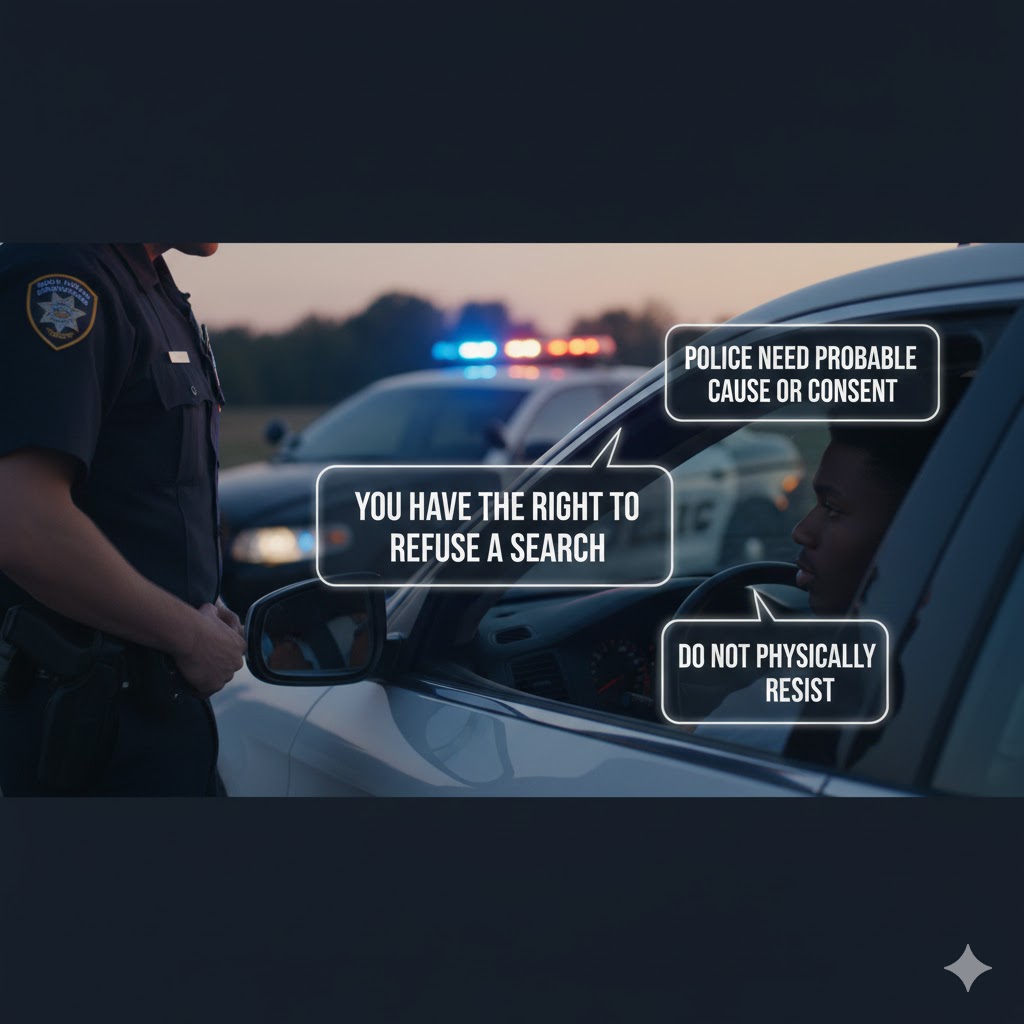
What Are Your Rights When Police Ask to Search Your Car?
Few questions create instant tension like this one: “Do you mind if I take a look inside your car?” It sounds casual. It sounds polite. But for most drivers, it triggers immediate uncertainty. Am I required to say yes? What happens if I say no? Will refusing make things worse? Even people who generally understand their rights can freeze in this moment.
That reaction is normal. A request to search your car sits at the crossroads of authority, uncertainty, and potential consequences. The way you respond can shape the entire encounter. Understanding your rights ahead of time is one of the most powerful tools you can carry into any traffic stop.
This guide explains what your rights are when police ask to search your car, how to respond calmly, what mistakes to avoid, and how tools like the H.E.L.P. App support protection without escalation. The goal is clarity, not confrontation, and confidence, not fear.
Why This Question Feels So Pressuring
When an officer asks to search your car, the power dynamic immediately shifts. The question is framed politely, but it carries implied authority. Many people feel that saying no will lead to punishment or suspicion. Others worry that saying yes will expose them to risk, even if they have nothing to hide.
Psychologically, this moment activates stress responses. Your heart rate increases. Your mind races through worst-case scenarios. The desire to resolve discomfort quickly pushes people toward compliance.
Knowing your rights in advance interrupts that automatic response.
The Core Rule: Consent Is Optional
In most situations, police must have either your consent, a warrant, or legal justification to search your car. If they are asking, it usually means they are seeking consent.
Consent is voluntary. You are generally allowed to say no.
Saying no is not illegal. It is not an admission of guilt. It is an exercise of a constitutional right.
Understanding this single principle changes everything.
Why Police Ask for Consent
Officers may ask for consent because:
They do not have probable cause
They want to expand the scope of the stop
They are testing compliance
They are gathering information
A consent search makes evidence easier to use later. That is why the question is asked.
The question itself is not wrongdoing. It is a request.
What Happens If You Say Yes
If you say yes, you are granting permission. Anything found during the search may be used as evidence. Even items unrelated to the original stop can become part of the interaction.
Once consent is given, it is difficult to challenge the search later. That is why understanding the weight of the word “yes” matters.
What Happens If You Say No
If you calmly say no, the officer must decide whether they have independent legal grounds to search anyway. Sometimes the interaction continues without a search. Sometimes additional questions follow. Sometimes a K-9 unit is requested if legally allowed.
Saying no may feel uncomfortable, but discomfort does not equal danger.
How to Say No Calmly and Clearly
Tone matters. Words matter. The safest approach is brief and respectful.
A simple statement works best:
“I do not consent to any searches.”
This sentence:
Is clear
Is non-confrontational
Preserves your rights
Creates a verbal record
Avoid explaining or justifying your refusal.
Why Over-Explaining Can Hurt You
Many people add unnecessary explanations like, “I don’t have anything, but I’d rather not,” or “I’m in a hurry.” These explanations invite further questioning.
Silence after refusal is often your strongest ally.
Can Police Search Anyway?
Yes, under certain circumstances.
Police may search without consent if:
They have probable cause
A warrant exists
Items are in plain view
A lawful arrest occurs
Exigent circumstances apply
If one of these applies, refusal may not stop the search. Still, refusing preserves your legal position.
What Is Probable Cause?
Probable cause means there is a reasonable basis to believe a crime has occurred or evidence is present. It is more than a hunch, but less than proof.
Odors, visible contraband, or credible observations may be cited as probable cause.
Whether probable cause truly exists is often decided later, not roadside.
Why You Shouldn’t Argue Probable Cause on the Spot
Debating legal standards during a traffic stop increases risk and rarely changes outcomes. Courts exist to analyze legality. Roadsides do not.
Calm compliance combined with refusal preserves safety and rights simultaneously.
What About K-9 Searches?
In some jurisdictions, officers may call a K-9 unit if it does not unreasonably prolong the stop. Dogs are trained to detect odors, not search at random.
You are not required to consent to a K-9 sniff, but your ability to stop one depends on timing and local law.
Again, refusal preserves your position.
How Body Language Affects These Moments
Your body communicates constantly. Sudden movements, agitation, or defensive posture may escalate tension.
Visible hands, slow movements, and neutral posture signal non-threat. Calm body language supports calm outcomes.
Why Recording Can Be Helpful
Documentation protects everyone. Recording provides an objective record of what was said and done.
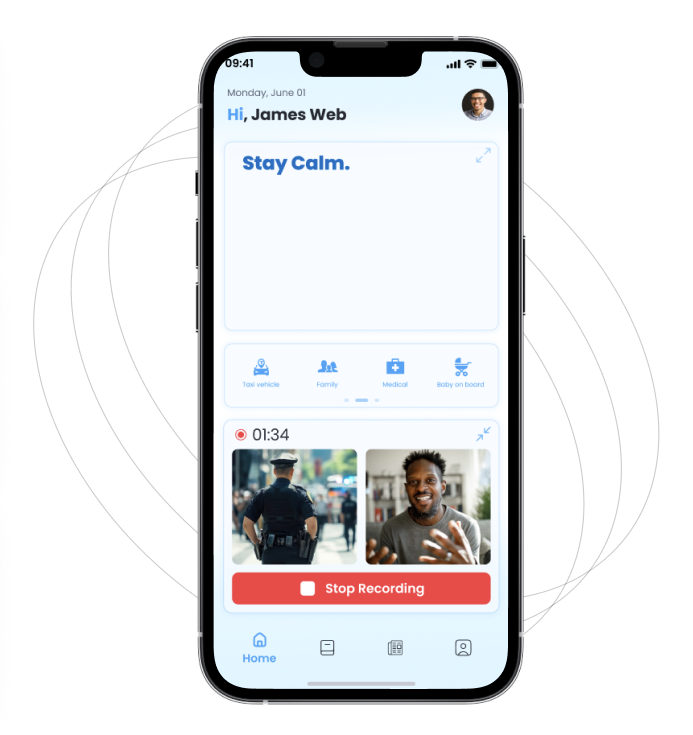
Using a tool like the H.E.L.P. App (Helping Ensure Legal Protection) allows discreet, one-touch recording with automatic cloud backup. This reduces the need to interact with your phone during a stressful moment.
Knowing a record exists lowers anxiety.
How the H.E.L.P. App Supports You Here
The H.E.L.P. App preserves evidence quietly. It timestamps, backs up, and secures recordings automatically.
If a dispute arises later about consent or conduct, objective documentation matters.
The app protects without provoking.
What Not to Say
Avoid statements like:
“Go ahead, I’ve got nothing to hide”
“Sure, I guess”
“I don’t care”
Ambiguous language may be interpreted as consent.
Clear language protects you.
Can You Change Your Mind After Consenting?
In some cases, consent can be withdrawn. However, once a search is underway or evidence is found, withdrawal may not stop it.
That is why initial clarity matters.
What If You’re Pressured After Refusing?
If pressure continues, repeat your refusal calmly:
“I do not consent to any searches.”
Do not argue. Do not raise your voice. Repetition without emotion is effective.
Why Remaining Polite Matters
Politeness is not submission. It is strategy.
Calm politeness reduces escalation and protects credibility.
Passengers and Consent
Drivers generally control consent for vehicle searches. Passengers may have rights over their personal belongings.
However, asserting those rights can be complex in the moment. Calm documentation matters.
What About Trunks and Containers?
Consent can be limited. You may specify areas if you choose to consent, but partial consent creates complexity.
The safest option is clear refusal unless legally required otherwise.
Why Knowledge Reduces Fear
Most panic comes from uncertainty. Knowing your rights replaces fear with clarity.
Prepared drivers behave predictably, which reduces tension.
Teaching New Drivers This Skill
New drivers often feel especially pressured to comply. Teaching them simple scripts builds confidence.
Practice saying, “I do not consent to any searches,” calmly.
What to Do After the Stop Ends
Once the encounter ends:
Write down details
Secure recordings
Avoid replaying the moment excessively
Seek legal guidance if needed
Processing calmly supports recovery.
Why Saying No Is Not Anti-Police
Refusing consent is not hostility. It is a constitutional option.
Clear boundaries protect both sides.
Why This Moment Matters So Much
Consent searches shape outcomes. Understanding this moment gives you control over one of the most impactful decisions during a stop.
The Bigger Picture: Rights as Tools, Not Weapons
Rights exist to protect, not provoke. Using them calmly preserves their purpose.
Final Thoughts
When police ask to search your car, the question feels heavy because it matters. Knowing your rights allows you to respond without fear, panic, or regret.
Calm refusal preserves safety and legal protection. Documentation preserves clarity. Preparation preserves confidence.
Take the Next Step
If you want quiet documentation during stressful encounters, choose tools designed for real-world moments.

