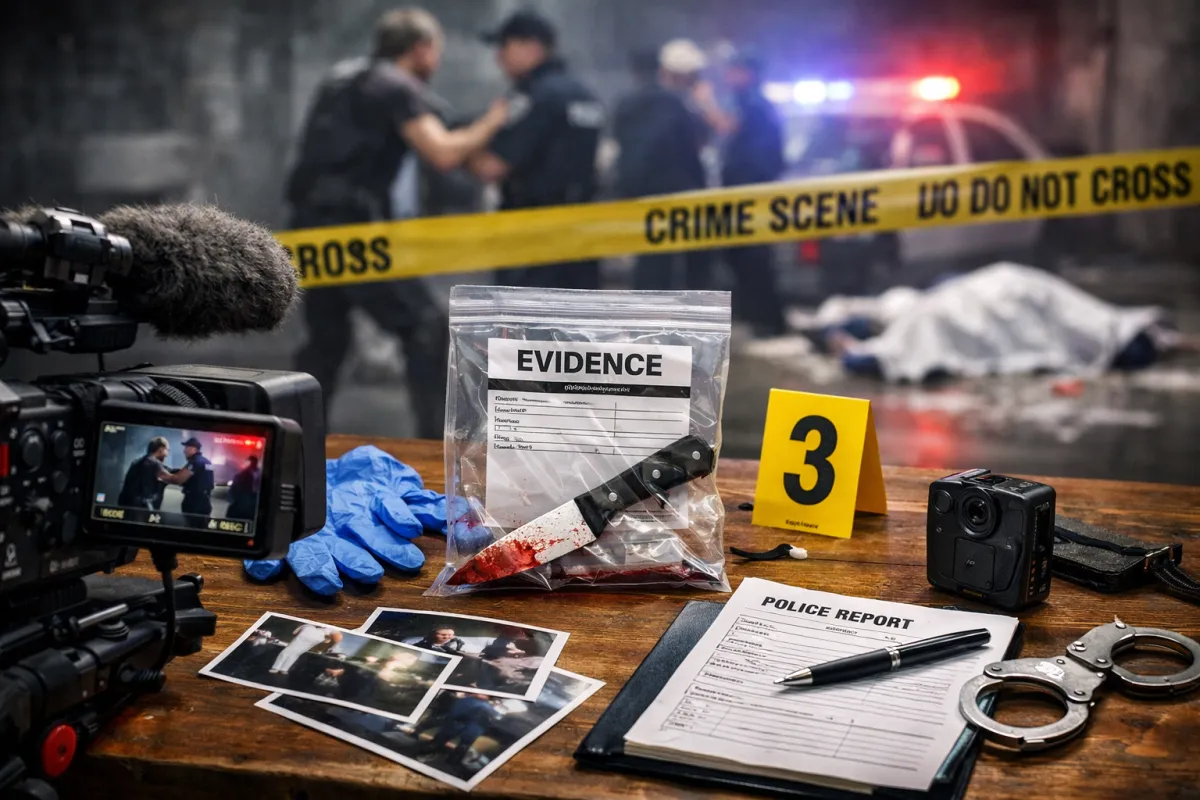
What Happens After the Camera Stops Rolling? The Role of Evidence
when people think about recording an encounter, they usually imagine the moment itself. The flashing lights. The raised voices. The tension. The decision to press record.
What often gets overlooked is what happens next—after the encounter ends, after the adrenaline fades, after the camera stops rolling.
That’s where evidence does its most important work.
Evidence is not just about capturing a moment. It’s about what that moment becomes later. How it’s reviewed. How it’s understood. How it’s used to clarify truth, protect rights, and resolve disputes fairly.
As discussed in Why Transparency Protects Truth — Even When Memories Don’t Match, documentation preserves reality when recollections shift. But preservation is only the first step. What happens afterward is where accountability truly takes shape.
Why the Moment After Matters More Than the Moment Itself
The encounter is temporary. The record is permanent. What you remember may fade. What others claim may change. But evidence stays the same.
After the camera stops rolling, evidence becomes the foundation for every next step.
Why Most Accountability Happens Later
Contrary to popular belief, accountability rarely happens in real time. It happens during reviews, investigations, complaints, hearings, and internal evaluations.
All of those processes depend on evidence.
As explored in Why Accountability Starts the Moment an Encounter Begins, the decision to document early directly impacts what can be reviewed later.
Why Memory Alone Isn’t Enough Afterward
Once time passes, memories shift. Stress reshapes perception. Confidence increases even as accuracy decreases.
Evidence stabilizes reality when recollection becomes unreliable.
This shift in power—from memory to verifiable proof—is part of the broader transformation explained in The Power Shift: When Citizens Have Evidence, Not Just Stories.
Why Evidence Must Be Preserved Correctly
Evidence that is altered, lost, or incomplete loses credibility. Preservation is just as important as recording.
Integrity determines impact.
That’s why timestamped, secure recordings matter. In The Hidden Power of Timestamped Video Evidence, we explain how time markers anchor truth and prevent narrative distortion.
Why Chain of Custody Matters
Chain of custody documents how evidence was handled. It ensures footage hasn’t been tampered with.
Trust depends on traceability.
Why Certified Evidence Carries More Weight
Certified evidence signals authenticity. It reassures reviewers that footage is original and unmodified.
Credibility accelerates resolution.
Why the H.E.L.P. App Focuses on Post-Encounter Protection
The H.E.L.P. App (Helping Ensure Legal Protection) isn’t just about recording moments. It’s designed to protect evidence after the encounter ends through timestamps, secure storage, and cloud backup.
Protection continues beyond the moment.
Why Cloud Backup Is Critical After Recording
Phones get lost. Files get deleted. Devices fail. Cloud backup ensures evidence survives these risks.
Survival preserves truth.
Why Evidence Is Reviewed More Calmly Than Encounters
Encounters are emotional. Reviews are analytical. Evidence allows decision-makers to step back and evaluate without pressure.
Distance improves judgment.
Why Evidence Influences Credibility Assessments
When accounts conflict, evidence often determines which version aligns with reality.
Alignment resolves disputes.
Why Evidence Protects Innocent People After the Fact
False accusations are harder to sustain when evidence exists. Documentation protects reputations.
Reputation matters long after encounters end.
Why Evidence Also Protects Professionals
Evidence confirms lawful, ethical conduct. It shields professionals from unfounded claims.
Protection builds confidence.
Why Evidence Encourages Early Resolution
Clear evidence resolves disputes faster. Ambiguity prolongs conflict.
Clarity saves time and stress.
Why Evidence Supports Due Process
Evidence informs decisions, but due process still applies. It supports justice rather than replacing it.
Process preserves fairness.
For more on legal rights and accountability standards, you can explore:
Electronic Frontier Foundation – Recording and Evidence
National Institute of Justice – Technology and Accountability
These institutions outline how documentation and civil rights protections intersect in modern accountability systems.
Why Evidence Is the Backbone of Accountability
Without evidence, accountability collapses.
Backbones support systems.
Evidence doesn’t argue. It shows. And showing is enough.
Final Thoughts
The camera stopping is not the end of the story. It’s the beginning of clarity.

What happens after an encounter—during reviews, evaluations, and decisions—is where evidence does its most important work. It protects truth when memory falters, supports fairness when narratives conflict, and allows justice to function calmly and responsibly.
Recording is not about the moment alone. It’s about what that moment becomes later.
And when evidence is preserved correctly, the truth has a chance to speak long after the noise fades.
Take the Next Step
If you believe protection should continue after the encounter ends, choose tools built for long-term clarity.