
When Does a Traffic Stop Cross the Line?
Traffic stops happen every day.
For millions of drivers, they’re routine.
For others, they quickly turn confusing, intimidating, or even unsafe.
Most people don’t actually know what officers are legally allowed to do during a stop — or what they’re not allowed to do. And that gap in understanding leads to fear, miscommunication, and unnecessary escalation.
The truth is this:
A traffic stop might start normally, but it can cross the line if your rights aren’t respected.
This guide breaks down exactly where that line is, how to recognize when it’s being crossed, and how the H.E.L.P. App (Helping Ensure Legal Protection) empowers you to protect yourself calmly, confidently, and legally.
Let’s dive in.
Know Why You Were Stopped (Your First and Most Important Right)
Legally, an officer must have a valid reason — called reasonable suspicion — to pull you over.
This includes:
Speeding
Broken lights
Swerving
Expired tags
Illegal turns
Not wearing a seatbelt
Distracted driving
You have the right to ask:
“Officer, may I know the reason for the stop?”
If the officer refuses to tell you, avoids answering, or changes their reason later, the stop may already be crossing the line.
Understanding the basis for the stop is the foundation for everything that happens next.
When Routine Questions Become Investigative (The Subtle Line Most People Miss)
Officers are allowed to ask basic questions:
“Where are you headed?”
“Do you know why I stopped you?”
“Is this your vehicle?”
These are normal.
But the line is crossed when questions start shifting into criminal investigation territory without justification:
“What are you doing in this neighborhood?”
“Who are your friends?”
“Have you been arrested before?”
“Do you have drugs or weapons in the car?”
“You look nervous — why?”
You are not required to answer these questions.
You can simply state:
“I choose to remain silent.”
And that is fully legal.
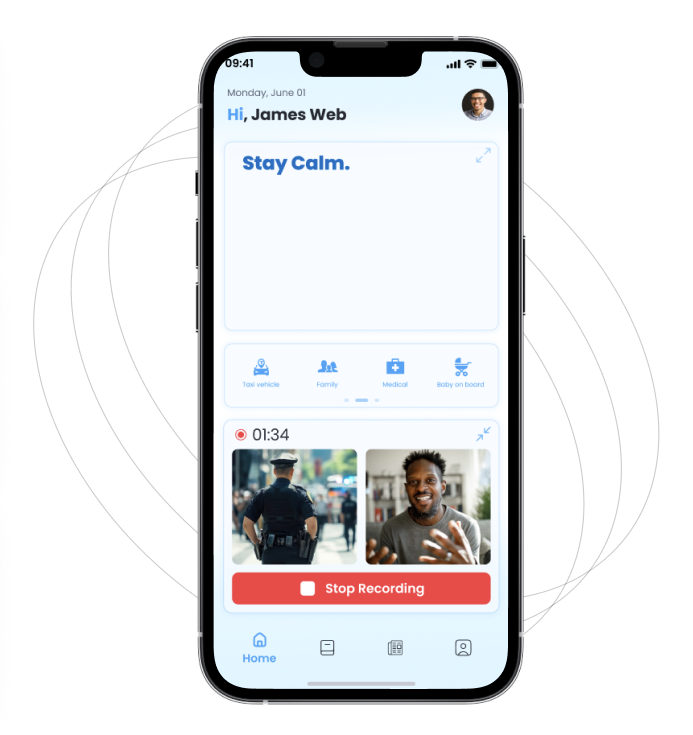
The H.E.L.P. App reinforces this by displaying your rights onscreen during the encounter — a calm reminder that keeps you steady under pressure.
When a Stop Turns Into an Unlawful Detention
A traffic stop must remain brief and focused on its original purpose.
Once the officer has:
Verified your license
Checked registration
Run your plates
Explained the violation
Issued a warning or ticket
…the stop should end.
Anything beyond that may be an unlawful detention unless the officer has developed reasonable suspicion of a new crime.
Warning signs include:
The officer will not let you leave
The officer delays returning your documents
The officer starts asking unrelated questions
The officer “waits for backup” with no explanation
The officer circles your car intentionally delaying the stop
This is often where encounters escalate unnecessarily.
The H.E.L.P. App recording helps protect you by capturing:
Tone
Behavior
Time elapsed
Purpose of the stop
Whether questions were related or unrelated
All of which matter later.
Consent Searches: The Most Common Way a Stop Crosses the Line
One of the biggest rights violations occurs when officers ask:
“Mind if I take a look inside your car?”
Many drivers believe they have to say yes.
You do not.
You can calmly respond:
“I do not consent to any searches.”
Unless the officer has:
Probable cause
A warrant
Visible illegal items
Safety concerns backed by law
…they cannot search your vehicle without consent.
If you say no and the officer searches anyway, the stop has crossed the line.
The H.E.L.P. App records your clear refusal — a powerful piece of evidence later.
Unnecessary Orders Can Signal an Escalation
Officers can order you:
To remain in the car
To step out of the car
…but they must have a lawful purpose.
An encounter crosses the line if you experience:
Orders shouted aggressively without reason
Demands unrelated to safety or investigation
Attempts to intimidate or provoke
Threats for asking questions
Commands that contradict each other
You can comply physically while still asserting your rights verbally.
Example:
“I will follow your instructions, but I do not consent to a search.”
The H.E.L.P. App helps here too—its real-time guidance keeps you grounded and reduces emotional reaction.
When Officers Attempt to Block Recording
This is a major red flag.
You have a constitutional right to record the police.
If an officer tries to:
Block your camera
Take your phone
Tell you recording is illegal
Demand you turn it off
Threaten you for recording
…the stop may be crossing the line into unlawful conduct.
The H.E.L.P. App protects you because:
You can record discreetly
Footage uploads automatically
Even if the phone is taken, video is safe
Metadata verifies authenticity
This prevents the most common forms of evidence interference.
When You Are Asked to Exit the Car Without Explanation
Officers can ask you to step out of your vehicle, but they should provide a clear, safety-based justification.
A stop crosses the line if:
You are ordered out with threats
The reason is vague or shifting
The tone is aggressive
There is no safety concern
You feel forced without clarity
Remember:
Stepping out is not an admission. It’s compliance.
You can still assert your rights calmly.
Prolonged Stops Without Probable Cause Are Illegal
The U.S. Supreme Court has ruled:
A traffic stop cannot be extended beyond its purpose without new reasonable suspicion.
If an officer:
Calls for a K-9 unit without cause
Delays waiting for backup
Keeps questioning you for 20–30 minutes
Searches the area around your vehicle
Continues detaining you without explanation
…the stop may be unlawful.
The H.E.L.P. App documents the timeline — one of the strongest tools in proving an illegal detention.
The Stop Clearly Crossed the Line If Your Rights Are Ignored
If you say:
“I choose to remain silent.”
“Am I being detained or am I free to go?”
“I do not consent to a search.”
…and the officer disregards your statement entirely, the encounter may already be unlawful.
You are not required to repeat yourself or argue.
Let the recording show the violation.
Let the law handle the rest.
What To Do If You Believe the Stop Crossed the Line
After the encounter:
Save your H.E.L.P. App recording
Add notes in the Evidence Vault
Write down the officer’s name and badge number
Record patrol car number
Document time and location
File a complaint if necessary
Share the recording with an attorney
Facts matter.
Documentation matters.
Calmness matters.
The H.E.L.P. App was designed for exactly moments like this — when clarity and truth need to be preserved.
Your Rights Don’t Protect You If You Don’t Know Them
The line between a routine stop and an unlawful one can be thin — and it often shifts based on behavior, tone, confusion, or fear.
But when you:
Stay calm
Assert your rights respectfully
Record the encounter
Avoid escalating
Document every detail
…you protect yourself without putting anyone in danger.
The H.E.L.P. App is not just a tool — it’s protection, education, and empowerment in your pocket. It helps ensure every encounter stays accountable, transparent, and truthful.
Because when the truth is protected, so are you.
Download the H.E.L.P. App Today
Don’t wait for the wrong moment to wish you had it.
Protect your rights and your peace of mind today.

