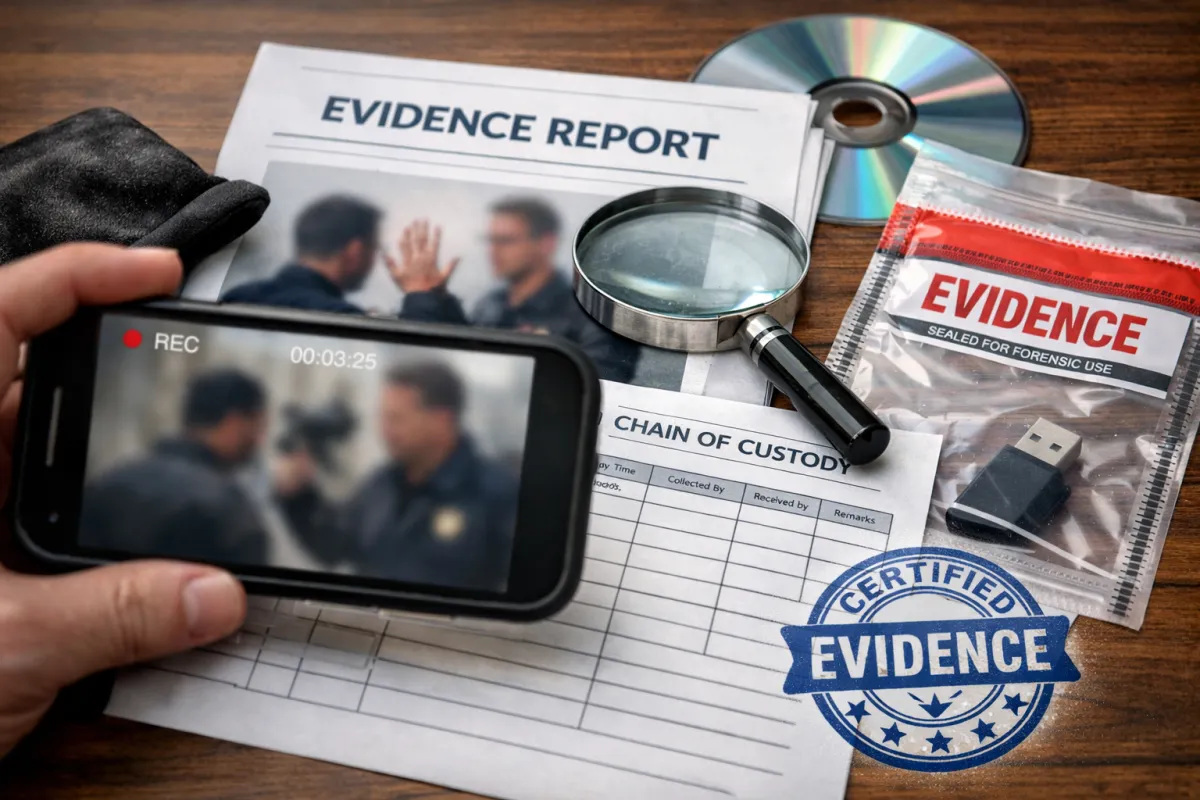
Why Recording an Encounter Isn’t Enough Without Certified Evidence
Recording has become second nature. Phones come out instinctively when something feels off—a traffic stop, a heated exchange, a moment that doesn’t sit right. Recording feels like protection. And in many ways, it is. Video has transformed accountability and public awareness in ways few could have imagined.

But here’s the uncomfortable truth: many people don’t learn until it’s too late: recording alone is not always enough.
A video clip, by itself, does not automatically equal usable evidence. Without certification, verification, and preservation, even powerful footage can be questioned, minimized, or dismissed. The difference between having a recording and having certified evidence is the difference between “I saw this happen” and “this can stand up when it matters.”
This guide explains why recording an encounter isn’t enough without certified evidence, what certified evidence actually means, and how tools like the H.E.L.P. App bridge that gap.
Why Recording Feels Like Enough
When something intense happens, recording feels empowering. It gives you a sense of control in an otherwise uncertain moment. The camera becomes a witness.
Many people assume that recording alone is enough because they understand they have the legal right to do so. Organizations like the ACLU have long emphasized the importance of knowing your rights, including your right to record law enforcement in public.
However, systems that evaluate evidence operate very differently than social media or public opinion.
The Gap Between Recording and Evidence
A recording is a file. Evidence is a verified record.
The gap between the two is where many people lose protection.
Evidence must answer specific questions:
When was this recorded?
Where was it recorded?
Has it been altered?
Who recorded it?
Has it been preserved intact?
If those questions cannot be answered clearly, the value of the recording drops.
This is where timestamps and metadata become critical, as explained in The Hidden Power of Timestamped Video Evidence.
Why Context Matters as Much as Content
A video clip shows what the camera captured—but not necessarily what happened before or after. Without verified context, opposing narratives can flourish.
Certified evidence preserves context by anchoring footage to a verified timeline and location. This is especially important in emotionally charged encounters, where calm communication already plays a role in safety and outcomes.
If you want to understand how calm behavior and documentation work together, read The Psychology of Police Encounters: How to Stay in Control Emotionally.
What “Certified Evidence” Actually Means
Certified evidence is evidence preserved in a way that protects its integrity. It typically includes:
Automatic timestamps
Embedded metadata
Secure storage
Documented chain of custody
Protection from editing or deletion
Certification doesn’t mean government approval. It means verifiable authenticity.
Institutions that handle investigations consistently emphasize these standards. The National Institute of Justice’s guidance on handling digital evidence highlights why preservation and integrity are essential.
Why Edited Videos Are Often Questioned
Even innocent edits—trimming silence, cropping frames, adjusting audio—can weaken evidence. Editing introduces doubt, even when no manipulation occurred.
Digital rights organizations like the Electronic Frontier Foundation’s work on digital evidence integrity explain why original, unaltered files carry far more weight than edited clips.
Why Social Media Clips Aren’t Evidence
Social media platforms prioritize engagement, not integrity. Videos are compressed, metadata is stripped, and timelines are altered.
A viral clip may sway public opinion, but it may not protect you legally.
This becomes especially relevant when people are told to stop recording. For practical guidance, see What to Do If You’re Told to Stop Recording.
Why Disputes Are Resolved After the Moment Ends
Most encounters aren’t resolved on the spot. They’re reviewed later—by supervisors, investigators, insurers, or courts.
Without certified evidence, outcomes rely heavily on memory and authority. With certified evidence, facts take center stage.
This is why many people later realize that having a witness—or documentation that acts like one—can change everything, as explained in Why Every Traffic Stop Deserves a Witness.
How the H.E.L.P. App Bridges the Gap
The H.E.L.P. App (Helping Ensure Legal Protection) was built to turn recordings into certified evidence automatically.
It provides:
Automatic timestamps
Secure cloud backup
Preserved metadata
Protection even if your phone is lost or seized
By removing manual steps during stressful moments, the app allows you to stay calm and focused—without narrating or managing files.
You can learn more about what happens after an encounter in How the H.E.L.P. App Protects You After the Encounter Is Over.
Why Certified Evidence Protects Everyone
Certified evidence doesn’t take sides—it preserves truth. Clear records protect civilians, officers, and institutions alike.
This principle aligns with civil rights documentation standards outlined by the U.S. Department of Justice’s Civil Rights Division.
Final Thoughts
Recording an encounter is a powerful first step—but it is not the finish line. Without certification, recordings remain vulnerable to doubt, dismissal, or disappearance.
Certified evidence preserves truth beyond the moment. It protects you when emotions fade and facts matter most.
Quiet protection. Verifiable truth. Real power.
Take the Next Step
If you want your recordings to stand up when it matters, choose tools designed for integrity—not just capture.
👉 Download the H.E.L.P. App