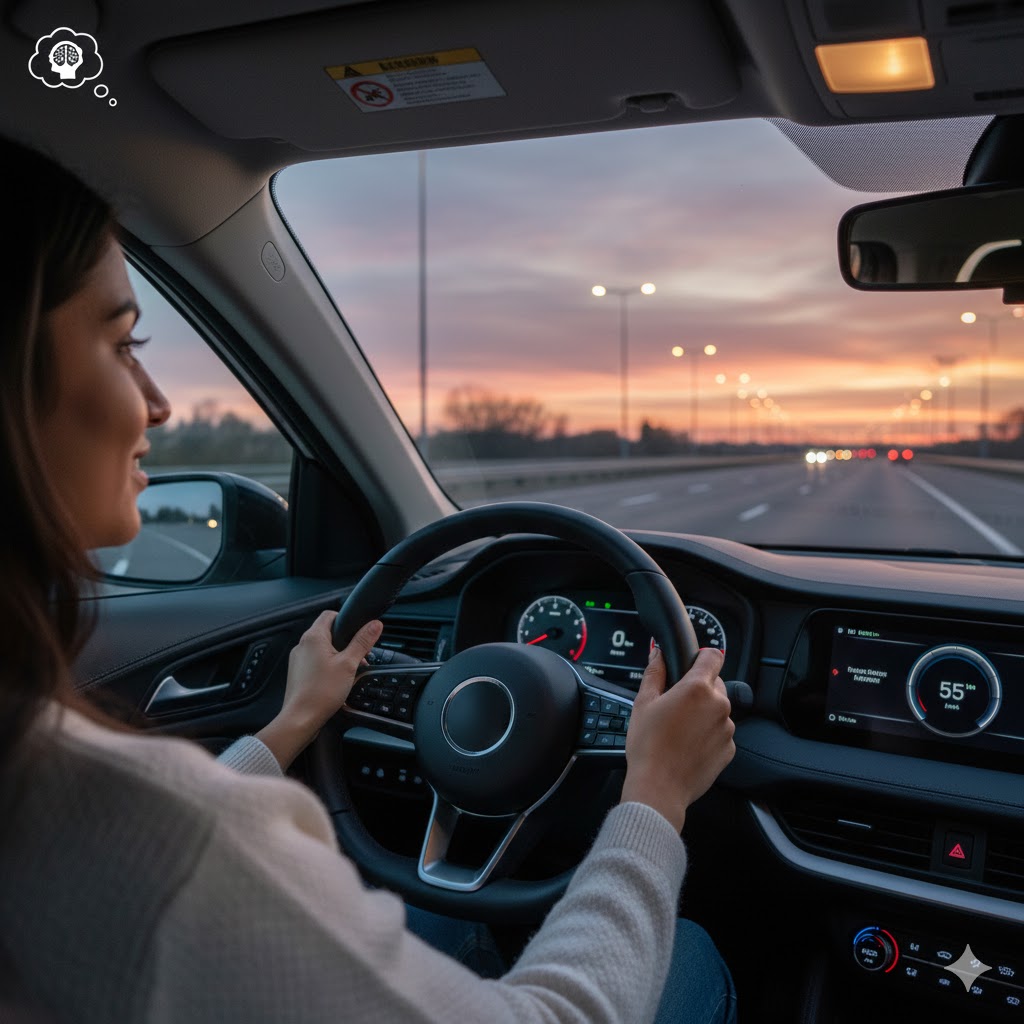
Driving Anxiety Solutions: How to Feel Safer and More in Control on the Road
Driving anxiety is far more common than people admit. It doesn’t always manifest as panic attacks or white-knuckle steering. Sometimes it looks like avoiding highways, dreading night driving, replaying near-miss moments in your head, or feeling exhausted after even short trips. If you’ve ever thought, “Why does this feel harder for me than it should?” you’re not alone.
The good news is that driving anxiety is not a personal failure. It’s a nervous system response. And like any response, it can be understood, managed, and improved with the right tools.
This guide is designed to provide driving anxiety help that’s realistic, supportive, and grounded in everyday life. We’ll explore why driving anxiety happens, what actually helps, and how modern tools—including the H.E.L.P. App—can help you feel safer and more in control on the road.
No shame. No pressure. Just practical solutions that work when it matters most.
What Driving Anxiety Really Is (And What It Isn’t)
Driving anxiety is not a lack of skill. Many people with driving anxiety are excellent drivers. They follow rules, stay alert, and think ahead. The issue isn’t competence—it’s anticipation.
Anxiety thrives on uncertainty. Driving combines speed, unpredictability, and responsibility, which makes it a perfect trigger for an anxious brain. One stressful experience can linger for years, even if nothing “bad” actually happened.
Driving anxiety is also not rare. It affects new drivers, experienced drivers, commuters, parents, and people who drive for work. It can appear suddenly or build slowly over time.
Understanding this is the first step toward relief.
Common Triggers Behind Driving Anxiety
Driving anxiety doesn’t come from nowhere. It usually develops after specific triggers, even subtle ones.
Some common triggers include:
Being pulled over unexpectedly
Getting lost or missing an exit
Heavy traffic or aggressive drivers
Driving at night or in bad weather
Past accidents or near misses
Feeling judged by other drivers
Fear of being stranded or misunderstood
These triggers teach the brain that driving equals danger, even when the risk is low. The brain’s job is protection, not logic, so it overreacts.
The goal of driving anxiety help isn’t to eliminate fear entirely. It’s to retrain your nervous system to respond more calmly.
Why Avoidance Makes Driving Anxiety Worse
One of the most tempting responses to anxiety is avoidance. You skip certain routes. You delay trips. You ask others to drive when possible. While this feels helpful in the short term, it reinforces the anxiety long-term.
Avoidance tells your brain, “You were right. This is dangerous.” That message strengthens the fear.
Progress comes from controlled exposure paired with safety and preparation. Not forcing yourself into terrifying situations, but gently expanding your comfort zone.
Reframing Control: What You Can and Can’t Control While Driving
Driving anxiety often comes from the belief that you must control everything to be safe. But no driver controls everything. They control their behavior, not the environment.
What you can control:
Your speed
Your attention
Your preparation
Your reactions
What you cannot control:
Other drivers’ behavior
Sudden road changes
Weather shifts
Unexpected stops or encounters
Learning to focus on controllable factors reduces mental overload and builds confidence.
Practical Driving Anxiety Help That Actually Works
There’s no single cure for driving anxiety, but there are reliable strategies that help most people feel safer driving.
The key is layering solutions instead of relying on one technique.
Tool #1: Preparation That Reduces Uncertainty
Anxiety feeds on “what if.” Preparation answers those questions before they spiral.
Helpful preparation habits include:
Checking routes ahead of time
Using navigation even on familiar trips
Leaving early to avoid rushing
Reviewing weather conditions
Knowing where you can safely pull over
Preparation isn’t about perfection. It’s about predictability.
Tool #2: Breathing Techniques You Can Use While Driving
Your breath is one of the fastest ways to calm your nervous system.
A simple technique:
Inhale through your nose for four seconds
Exhale slowly through your mouth for six seconds
Repeat three times
Longer exhales signal safety to the brain. You can do this at stoplights or during slow traffic without anyone noticing.
Tool #3: Mental Scripts That Replace Catastrophic Thinking
Anxiety often narrates worst-case scenarios. Countering that narrative is powerful.
Replace “Something bad is going to happen” with:
“I’ve handled this before”
“I can pull over if I need to”
“I don’t have to rush”
“I’m allowed to take my time”
These phrases ground you in reality instead of fear.
Tool #4: Exposure in Small, Intentional Steps
You don’t have to conquer highways overnight.
Start with:
Short trips at quiet times
Slightly longer routes each week
Gradually adding challenging conditions
Progress is cumulative. Small wins matter.
Tool #5: Tools for Driving Anxiety That Work in the Background
One overlooked contributor to driving anxiety is feeling alone. Knowing that support exists—even if you don’t need it—changes how safe you feel.
This is where modern safety tools make a real difference.
How the H.E.L.P. App Supports Driving Anxiety Relief
The H.E.L.P. App (Helping Ensure Legal Protection) wasn’t designed specifically for anxiety, but it addresses several core fears that fuel driving anxiety.
Many drivers worry about:
Being misunderstood during a traffic stop
Not knowing what to say
Losing control of a situation
Something happening without witnesses
The H.E.L.P. App reduces these fears by offering:
One-touch recording
Automatic cloud backup
Time and location verification
Calm, on-screen guidance about your rights
For anxious drivers, this creates a safety net. You’re not just driving—you’re supported.
Why Feeling Protected Changes How Safe You Feel Driving
Safety isn’t just physical. It’s psychological.
Knowing you have tools in place reduces hypervigilance. Your brain relaxes when it knows there’s backup.
This is why having roadside assistance, navigation, and legal-protection tools reduces anxiety—even if you never use them.
Driving Anxiety and Traffic Stops
For many people, traffic stops are a major anxiety trigger. Not because of guilt, but because of uncertainty.
Questions like:
What should I say?
What if I mess up?
What if I’m misunderstood?
Preparation reduces this fear. Knowing your rights and having documentation tools available helps you stay calm and compliant without panic.
How to Feel Safer Driving at Night
Night driving anxiety is common and understandable.
Helpful strategies include:
Cleaning headlights and windshields
Reducing interior glare
Driving familiar routes
Lowering music volume
Using navigation for reassurance
Night driving feels less threatening when visibility and predictability improve.
How to Feel Safer Driving in Traffic
Traffic anxiety often stems from feeling trapped.
Ways to regain control:
Stay in slower lanes
Increase following distance
Avoid peak hours when possible
Use calming audio instead of silence
Remember, arriving a few minutes later is always safer than pushing yourself too hard.
Tools for Driving Anxiety That Are Often Overlooked
Some tools are surprisingly effective:
Offline maps in case signal drops
A phone mount to avoid fumbling
Emergency contact sharing
Pre-written “running late” messages
These tools remove decision-making pressure.
Why Driving Anxiety Often Improves With Time and Support
Driving anxiety is not permanent. With the right support, most people see significant improvement.
The brain learns safety through repetition. Every calm drive is evidence that challenges fear.
Progress may be uneven, but it’s real.
What to Do If Anxiety Spikes Mid-Drive
If anxiety rises suddenly:
Slow down
Breathe deeply
Pull over if needed
Ground yourself by naming what you see
You are allowed to pause. Safety includes self-care.
Driving Anxiety and Self-Compassion
Being hard on yourself makes anxiety worse.
Instead of asking, “Why am I like this?” ask, “What do I need right now?”
Self-compassion reduces stress hormones and speeds recovery.
Why Confidence Comes From Systems, Not Bravery
Confidence isn’t the absence of fear. It’s knowing you have systems in place.
Navigation, emergency tools, safety apps, and preparation create confidence naturally.
You don’t have to be fearless. You just have to be supported.
How to Measure Progress Without Pressure
Progress isn’t about perfection.
Signs of progress include:
Less dread before driving
Shorter anxiety spikes
Faster recovery
More flexibility in routes
Celebrate these wins.
Why This Matters Beyond Driving
Learning to manage driving anxiety builds skills that apply everywhere: calm thinking, self-trust, and resilience.
What you learn on the road carries into life.
Final Thoughts
Driving anxiety doesn’t mean you’re broken. It means your brain is trying to protect you.
With preparation, support, and the right tools, you can feel safer driving—and more in control—without forcing yourself or minimizing your feelings.
Take the Next Step
If feeling protected helps you feel calmer behind the wheel, consider tools designed to support you in real-world situations.