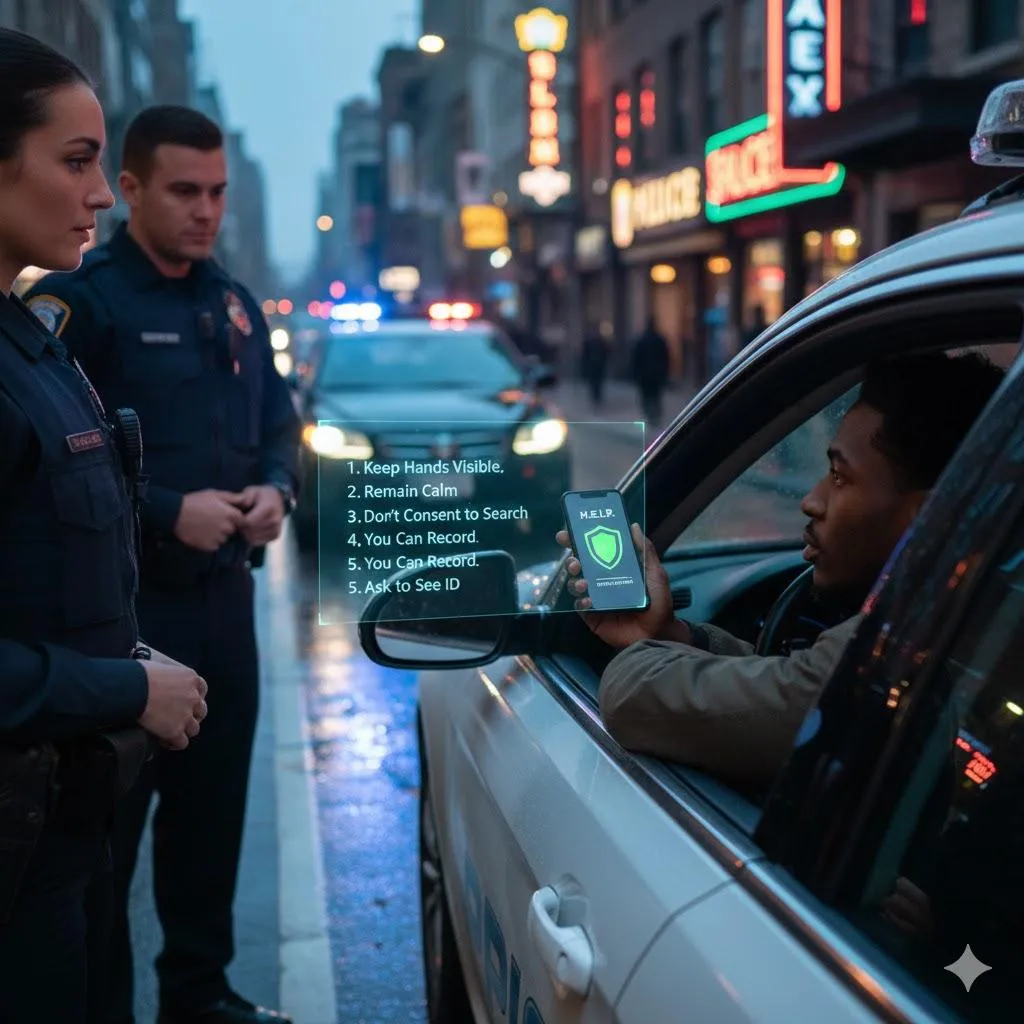
The Most Important Thing to Do When You Feel Unsafe During a Stop
Traffic stops happen every day. Most end quickly and without incident.
But that doesn’t mean they always feel safe.
If flashing lights trigger anxiety, confusion, or fear — that response is common. When your body reacts, the key is not panic, but preparation.
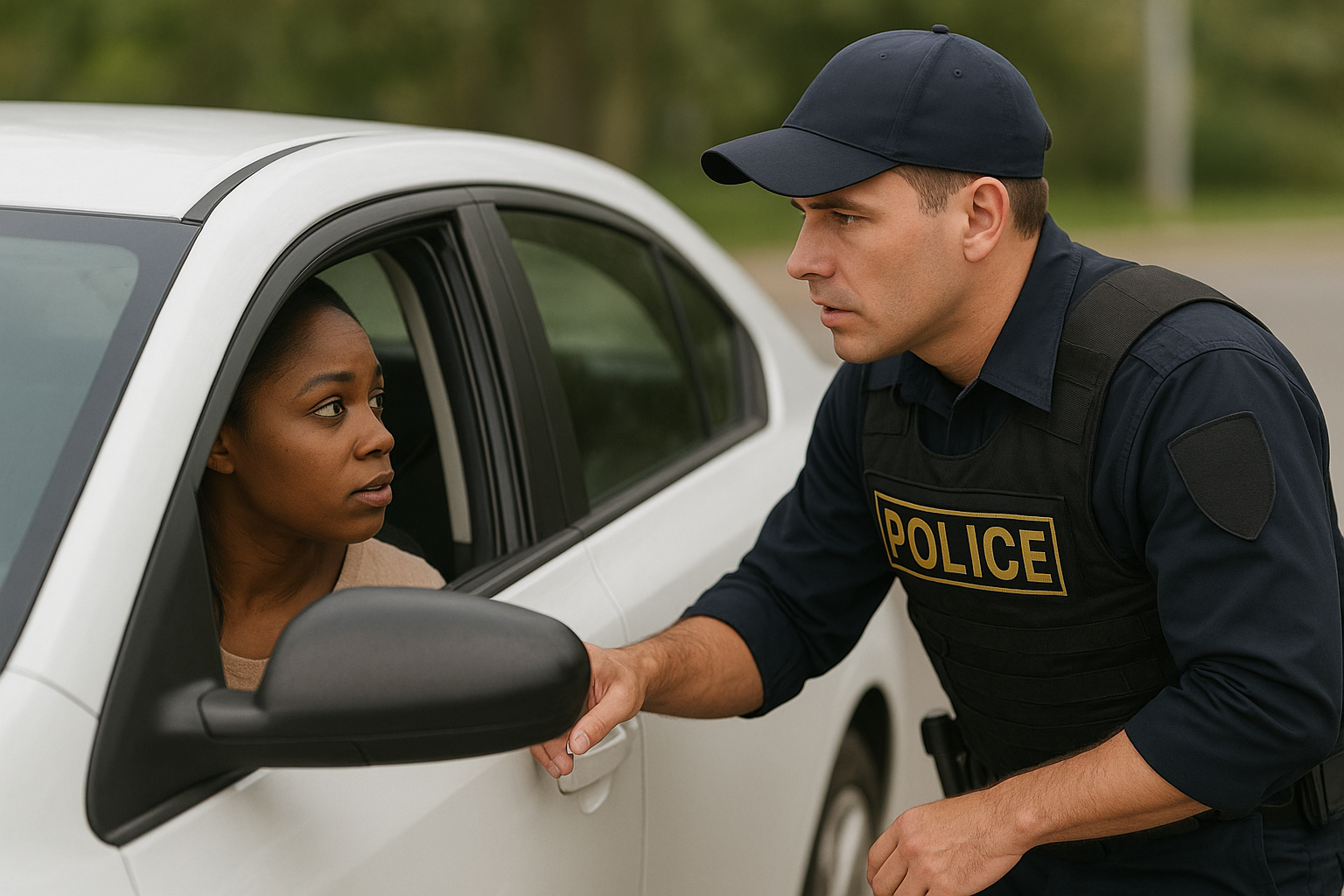
So What Is the Most Important Thing to Do?
When you feel unsafe during a stop:
Stay calm. Move deliberately. Speak clearly. Document the encounter.
That combination protects both your safety and your rights.
Why Feeling Unsafe Doesn’t Always Mean Immediate Danger
Feeling unsafe is often emotional, not necessarily predictive of harm.
It may mean:
Your body is reacting to adrenaline
You are uncertain about your rights
You are interpreting tone or behavior as tense
You don’t know what happens next
The nervous system responds quickly to perceived threat. Understanding that reaction helps you regain control.
Regulate Your Nervous System First
When flashing lights appear:
Breathing becomes shallow
Muscles tighten
Thoughts accelerate
Pause and control your breath.
Try this:
Inhale for four seconds
Hold for four seconds
Exhale for four seconds
Repeat
Slow breathing reduces visible anxiety and lowers tension. Calm behavior reduces misinterpretation.
If helpful, review more about your rights during interactions through resources like guidance on knowing your rights during police encounters — preparation reduces uncertainty.
Calm Is Protective — Not Passive
Remaining calm does not mean surrendering rights.
It means reducing escalation.
Officers assess threat levels based on movement, tone, and body language. Rapid motion or loud language can increase perceived risk.
Calm behavior:
Lowers misunderstanding
Reduces escalation
Improves communication
Strategic calm protects you.
Make Your Movements Predictable
Unpredictable movement creates concern.
During a stop:
Keep your hands visible
Move slowly when reaching for documents
Turn on interior lights at night
These actions signal cooperation.
You do not need exaggerated gestures — just deliberate movement.
Predictability reduces tension.
Speak Clearly and Respectfully
If you feel unsafe, your instinct may be to argue.
Resist that impulse.
Use short, neutral sentences such as:
“I want to cooperate.”
“I’m reaching for my wallet slowly.”
“I’m not trying to cause problems.”
Clear communication protects you without escalating conflict.
What If the Officer’s Tone Feels Aggressive?
Tone influences perception.
If an officer sounds impatient or stern:
Do not mirror aggression
Match calm with calm
Escalation rarely improves outcomes.
Your composure matters more than their tone.
The Most Important Tool: Document the Encounter
Documentation preserves facts.
Recording captures:
Tone
Instructions
Sequence of events
Compliance
It is not about confrontation — it is about clarity.
Secure recording tools like the H.E.L.P. App (Helping Ensure Legal Protection) allow one-tap activation with timestamped cloud storage.
If your device is damaged, secure backup protects the record.
Preserving evidence protects you later.
Why Recording Reduces Anxiety
When an encounter is documented:
You do not rely on memory alone
You reduce second-guessing
You preserve objective evidence
Certainty reduces emotional stress.
What to Say If You Feel Unsafe
You can calmly state:
“I feel uncomfortable and want to make sure this goes smoothly.”
This is neutral communication — not accusation.
Keep it simple. Keep it calm.
If You Are Asked to Step Out of the Vehicle
Follow lawful instructions calmly.
If you disagree, you may say:
“I’m complying, but I do not consent.”
This preserves your position without escalating tension.
Document the interaction if possible.
Silence Can Be Protective
You are not required to answer every question.
If you choose not to respond, calmly say:
“I prefer not to answer that.”
Avoid sarcasm or hostility.
Clear boundaries protect your rights.
Physical Resistance Is Not the Answer
Even when you believe something is unfair:
Comply physically
Object verbally
Document carefully
Physical resistance increases risk and rarely improves outcomes.
Safety comes first.
Simple Language Reduces Escalation
Use short phrases like:
“I understand.”
“I’m listening.”
“I’m cooperating.”
These statements reduce tension while preserving dignity.
Why Documentation Matters After the Stop
A stop may last minutes.
Its impact may last months.
Documentation becomes important if:
A citation contains errors
A report misstates events
A formal complaint is necessary
Timestamps clarify sequence and protect credibility.
Accurate records strengthen fairness.
Why Cloud Backup Is Important
Recording alone is not enough.
Phones break. Files disappear.
Secure cloud storage ensures the record survives.
Reliable preservation protects evidence.
Preparation Reduces Fear
Understanding your rights helps you feel grounded.
Know that you have:
The right to remain silent
The right to decline consent when appropriate
The right to document the encounter
Knowledge reduces panic.
Why Social Media Is Not the First Step
If you feel unsafe:
Pause before posting.
Consult legal guidance first.
Public reaction can complicate resolution.
Resolution is often more effective than immediate reaction.
Why Calm Strengthens Credibility
If disputes arise later:
Calm conduct supports credibility
Aggression weakens perception
Documentation reinforces facts
Composure matters in legal review.
Why Families Should Prepare
Young drivers and teenagers benefit from simple preparation:
Practice breathing control
Teach respectful communication
Understand documentation options
Preparation protects households collectively.
If you want structured guidance for family preparedness, review trusted legal education resources and consider practical tools that support documentation.
Transparency Supports Justice
Recording encounters is not anti-authority.
It protects lawful behavior and documents misconduct equally.
Transparency:
Strengthens trust
Encourages professionalism
Supports accountability
Documentation benefits both sides.
One Recording Can Change an Outcome
A single clear record can:
Confirm compliance
Clarify tone
Resolve disputes
Prevent misinformation
One moment of preparation can shape future review.
Final Perspective
When you feel unsafe during a traffic stop:
Do not panic.
Do not escalate.
Do not react emotionally.
Instead:
Control your breath
Keep movements predictable
Speak clearly
Document carefully
Strategy replaces panic.
Clarity protects you.
Documentation supports you.
Calm carries you through.
Take the Next Step
If you want reliable protection when encounters feel uncertain, consider tools designed for real-world situations.
👉 Learn more about secure documentation options here:
https://early.helpapp.download

