
When Does a Police Encounter Become Unlawful?
Most people don’t question police encounters in the moment. They question them later.
That’s when doubt sets in: Was that allowed? Did I have to comply?
These questions aren’t about rebellion. They’re about understanding where police authority ends, and individual rights begin.
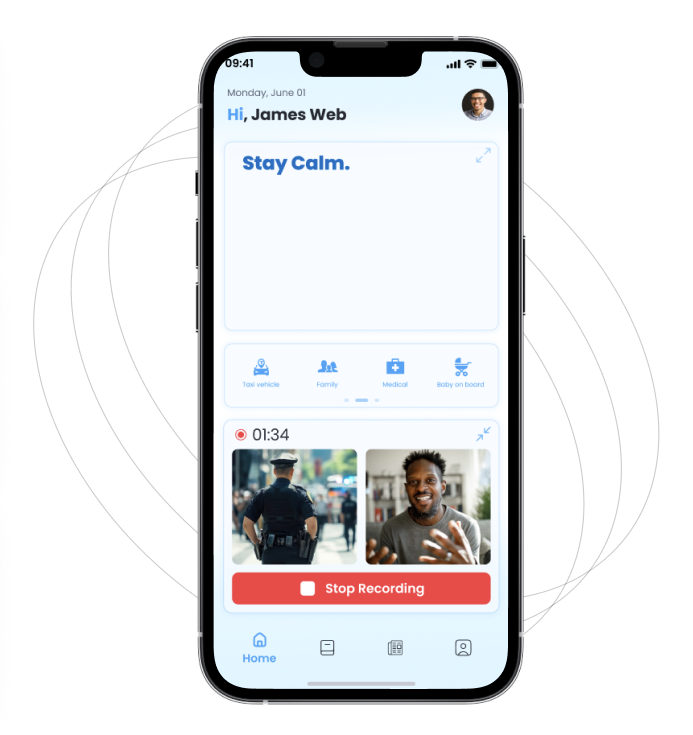
This guide explains when a police encounter becomes unlawful, how lawful encounters quietly cross legal boundaries, and why documentation tools like the H.E.L.P. App matter after the encounter—when facts, timelines, and credibility are everything.
Why Police Encounters Are So Confusing
Police authority is real—but it’s not unlimited. Uniforms, badges, and commands trigger compliance even when legal authority is missing. Stress delays analysis. Legality is usually understood after, not during, the encounter.
The Three Types of Police Encounters

Most encounters fall into one of three categories:
Consensual encounters
Detentions
Arrests
Encounters become unlawful when officers skip steps or exceed authority.
What Is a Consensual Encounter?
A consensual encounter is voluntary. You’re free to leave. You don’t have to answer questions.
If you can walk away, it’s consensual.
When It Turns Unlawful
A consensual encounter becomes unlawful when:
You’re not free to leave
Requests become commands
Movement is restricted without justification
What Is a Detention?
A detention (Terry stop) requires reasonable suspicion. It must be brief and related to the reason for the stop.
When a Detention Becomes Unlawful
It lasts longer than necessary
It expands beyond the original suspicion
It turns into interrogation
Courts routinely find prolonged detentions unconstitutional, as explained in the Fourth Amendment overview by Cornell Law School.
What Is an Arrest?
An arrest requires probable cause. Your freedom is fully restricted, and constitutional rights are triggered.

When an Arrest Becomes Unlawful
No probable cause exists
Force is unjustified
Rights are ignored
Why Transitions Matter More Than Labels
Officers don’t always announce when an encounter escalates. A consensual stop can quietly become a detention. A detention can drift into arrest territory.
Legality depends on what happens, not what it’s called.
Common Signs an Encounter Has Escalated
Watch for:
Orders replacing requests
Commands to stay put
Physical blocking
Property taken without explanation
These are legal warning signs.
Searches and Consent
Searches require consent or legal justification. Consent must be voluntary. Pressure or deception can invalidate it.
Knowing your rights when police ask to search your car helps prevent accidental waivers.
Why Arguing on the Spot Backfires
Roadside debates don’t determine legality. They increase risk.
The safer option is the calm approach to asserting your rights without escalating a situation—paired with documentation.
Why Duration Matters
Detentions must be temporary. Extending a stop without cause crosses legal boundaries, including during traffic stops.
Use of Force and Lawfulness
Force must be necessary and proportional. Excessive force can make even lawful encounters unlawful.
Why You Rarely Know in the Moment
Stress distorts perception and memory. That’s why courts rely on evidence—not feelings.
This is explored further in The Psychology of Police Encounters: How to Stay in Control Emotionally.
Why Documentation Matters Afterward
Unlawful encounters are proven, not proclaimed.
As explained in Why Recording an Encounter Isn’t Enough Without Certified Evidence, certified records protect credibility and strengthen claims.
The H.E.L.P. App preserves recordings automatically with timestamps and secure storage—when memory alone isn’t enough.
Why Complaints Without Evidence Struggle
Complaints backed by documentation carry weight. Evidence turns concerns into claims, a principle reinforced by ACLU Know Your Rights guidance.
Final Thoughts
Police encounters become unlawful through deviation from legal limits, not drama. Understanding those limits helps you stay calm, compliant, and protected—while preserving facts for later review.
Lawfulness is about boundaries. Knowing them is empowerment.
Take the Next Step
If you want quiet protection when legality is questioned later:
👉 Download the H.E.L.P. App to preserve certified evidence automatically

