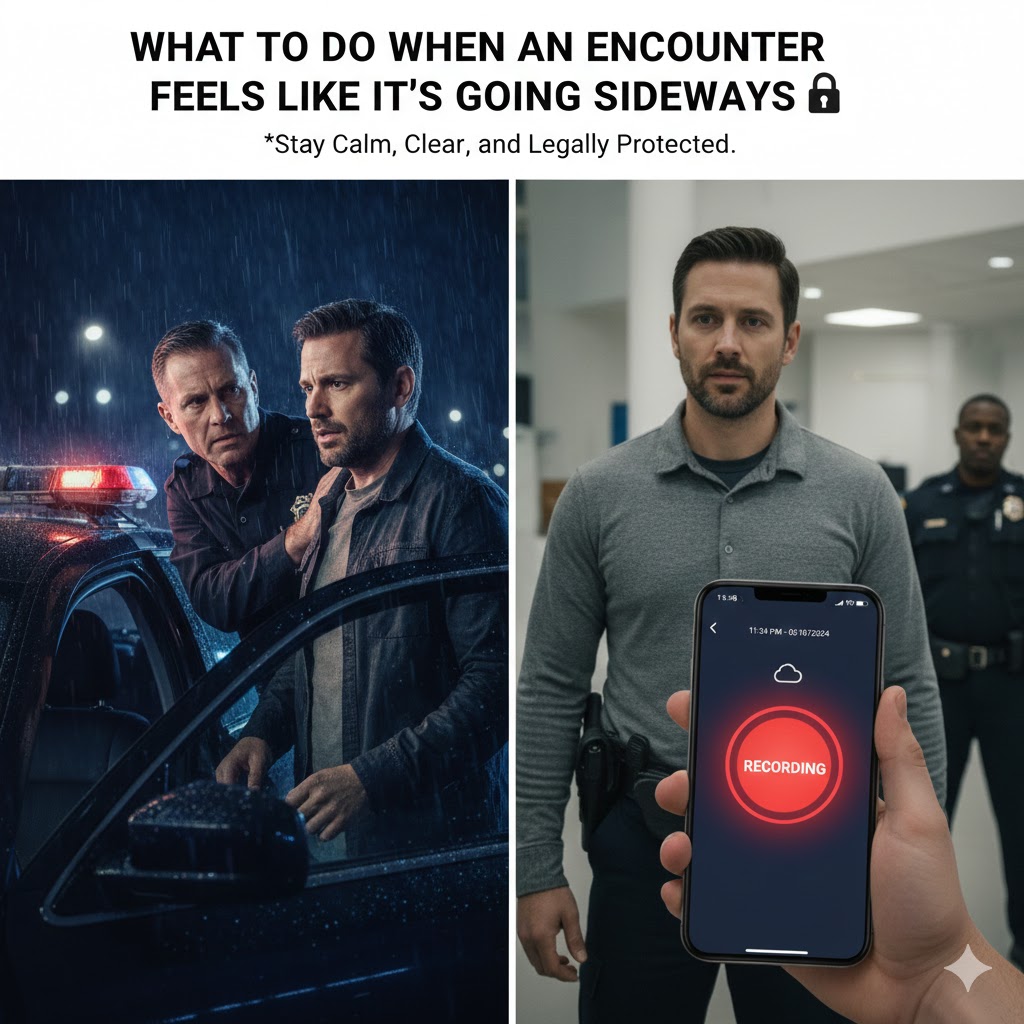
What to Do When an Encounter Feels Like It’s Going Sideways
Most encounters with authority begin normally. A routine traffic stop, a question on the sidewalk, or a knock at your door typically follows a predictable pattern. The tone is neutral, instructions are clear, and everyone understands their role.

But sometimes, the atmosphere shifts. The tone tightens, the pace speeds up, and you feel the situation drifting off course. That moment—when an encounter feels like it’s going "sideways"—is critical. What you do in those seconds can determine whether the situation stabilizes or escalates.
The good news is that you have more control than you think. By staying calm, clear, and protected during police encounters, you can de-escalate tension and preserve your legal standing.
Recognize the Shift and Control Your Physical Response
An encounter rarely explodes instantly; it drifts. Subtle cues like raised volume, faster instructions, or increased physical proximity are signals to adjust your behavior.
1. Control Your Breathing Immediately
The moment you sense tension, your nervous system triggers a "fight or flight" response. Slow it down by inhaling through your nose for four seconds, holding for four, and exhaling for four. Controlled breathing prevents your voice from shaking and lowers visible stress signals.
2. Slow Down Your Movements
Sudden gestures can be misinterpreted as a threat. If you need to reach for identification, verbally announce your intent first: “I’m going to reach into my pocket slowly.” Predictable, deliberate movement is a primary way to ensure you stay safe during a stop.
3. Keep Your Hands Visible
Visibility reduces uncertainty. If you are in a vehicle, keep your hands on the steering wheel. If standing, keep them relaxed at your sides. Hidden hands increase officer anxiety; visible hands lower it.
Communication Strategies for De-Escalation
When tension rises, the instinct is to match the other person’s energy. To protect yourself, you must do the opposite.
Lower Your Volume: Speak slowly and use simple sentences.
Use De-Escalation Language: Phrases like “I’m cooperating” or “I want this to go smoothly” communicate intent without surrendering your rights.
Avoid Arguments: Do not debate the law on the side of the road. Roadside arguments rarely resolve disputes and often intensify them. Safety now; legal strategy later.
Avoid Sarcasm: Humor is easily misinterpreted during high-stress encounters. Keep communication literal and respectful.
Pro Tip: If you choose to exercise your right to remain silent, state it clearly and calmly: "I prefer not to answer that question."
The Power of Calm Documentation
If an encounter feels unstable, documentation becomes your most essential tool. Recording a situation encourages professionalism and ensures that transparency wins in the end.
Why Timestamps and Cloud Storage Matter
When things go sideways, the exact sequence of events is often disputed. Did compliance occur immediately? Was a warning given?
Using the H.E.L.P. App (Helping Ensure Legal Protection) allows for one-tap recording with secure cloud storage. This ensures that even if your phone is damaged or confiscated, a verified, timestamped record of the encounter remains preserved. One clear recording can clarify an entire encounter during a later legal review.
Dealing with Searches
If asked for consent to search your person or vehicle, you have the right to say: “I do not consent to a search.” You do not need to argue. State your position clearly, stay calm, and let your documentation preserve what happens next.
What to Do After the Encounter
Once the situation has concluded and you are safe, take immediate steps to protect your long-term interests:
Secure Your Record: Ensure your video or audio file is saved and backed up.
Write Fresh Notes: Details fade quickly. Note the time, location, and officer names or badge numbers while they are fresh in your mind.
Avoid Impulsive Posting: Sharing footage on social media immediately can sometimes complicate legal proceedings. Consult with a professional first.
Seek Guidance: If you believe your rights were violated, reach out to organizations like the ACLU or seek private legal counsel.
Final Thoughts: Preparation Replaces Chaos
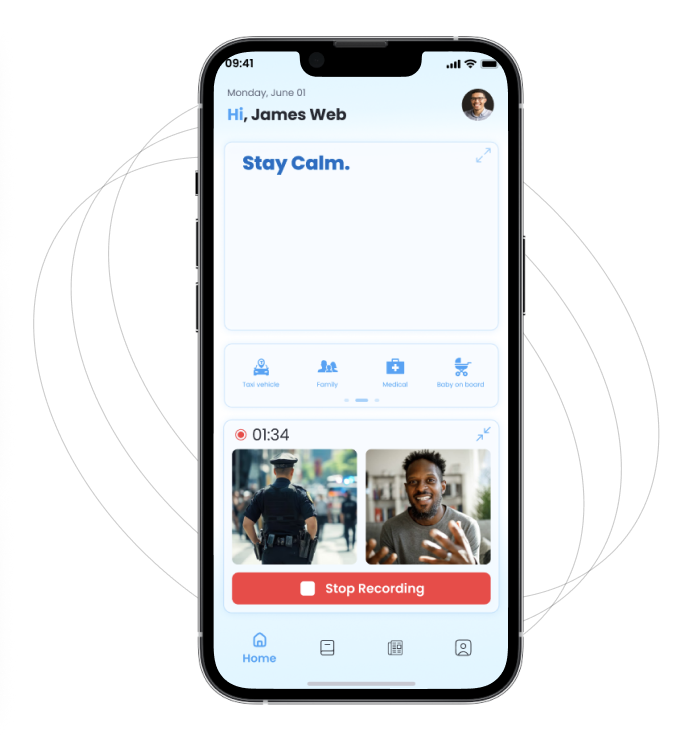
Encounters feel chaotic when you don’t have a plan. By practicing controlled breathing, maintaining visible movements, and having a reliable documentation tool ready, you replace panic with structure.
You cannot control the actions of others, but you can control your response. Composure strengthens your legal credibility and, most importantly, keeps you safe.
Take the Next Step
If you want reliable protection when encounters feel uncertain, equip yourself with tools designed for real-world clarity.